
Private Jet vs First Class: The Ultimate Guide to Choosing the Right Way to Fly in 2026
No fluff, no filler. Just the real numbers and honest perspective you need to make the right call.
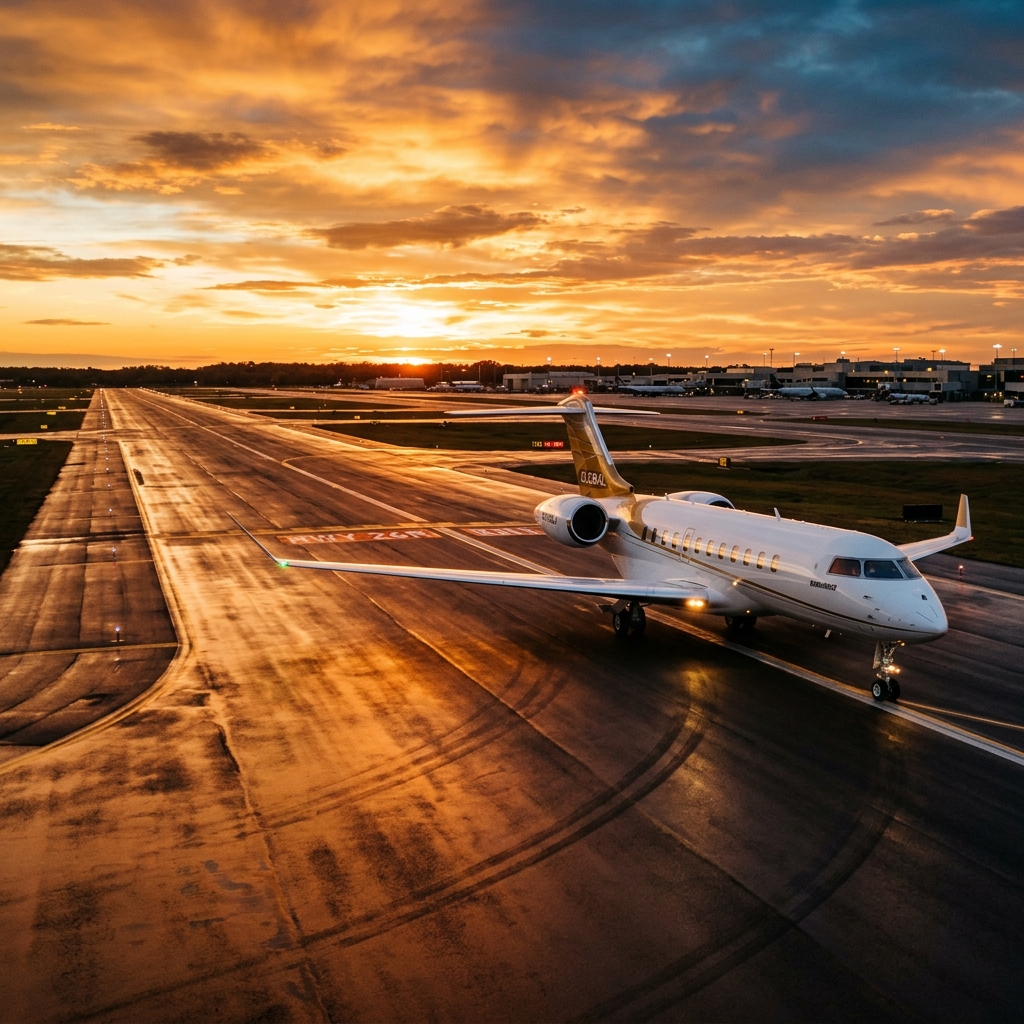
The New Golden Age of High-Altitude Luxury
Private Jet vs First Class, it is one of the most searched questions in luxury travel, and the answer is not as simple as you might think. Whether you are a business executive trying to squeeze productivity out of every travel hour, a family planning a milestone trip, or someone who has finally hit a financial milestone and wants to treat themselves, this decision deserves a real, data-backed answer.
This guide breaks down every angle of the debate: cost, time, safety, comfort, environmental impact, and when each option actually makes sense. No fluff, no filler. Just the real numbers and honest perspective you need to make the right call.
Private Jet vs First Class: What Are We Actually Comparing?
Before diving into numbers, it helps to frame what each option actually is. First class on a commercial airline puts you in the front cabin of a scheduled flight alongside other passengers, even if you have a suite-style seat with a sliding door. A private jet charter, on the other hand, means the entire aircraft is reserved for you and your party.
The experience gap between these two options is larger than most people realize, and it only widened between 2019 and 2026. Private aviation grew explosively during and after the pandemic, with charter volumes doubling compared to pre-2020 levels according to industry trackers. At the same time, airlines like Emirates, Singapore Airlines, and Lufthansa pushed first class to new heights of luxury.
So who wins? It depends on what you value most, and the honest answer is that the "best" option shifts based on group size, route, schedule flexibility, and your personal priorities.
The Real Cost Comparison: Private Jet vs First Class in 2026
Cost is almost always the first point of comparison, and the numbers are significant. Here is a grounded breakdown based on current 2026 market data.
Private Jet Charter Pricing
According to current charter market data, private jet rates in 2026 range from $2,000 to $18,000 per flight hour, depending on aircraft size, route, and operator. Long-range jets like the Gulfstream G700 or Bombardier Global 7500 can exceed $30,000 per hour on premium routes.
| Aircraft Category | Typical Range | Seats | Hourly Cost |
|---|---|---|---|
| Light Jet (e.g. Phenom 300) | Up to 2,000 miles | 6-8 | $2,000 - $4,000 |
| Midsize Jet (e.g. Citation Latitude) | Up to 3,000 miles | 8-9 | $4,000 - $8,000 |
| Large Jet (e.g. Gulfstream G450) | Up to 5,000 miles | 12-16 | $8,000 - $18,000 |
| Ultra Long-Range (e.g. G700, Global 7500) | 7,500+ miles nonstop | 10-19 | $18,000 - $30,000+ |
First Class Ticket Pricing
First class commercial ticket prices vary widely. A domestic first class seat in the U.S. might cost between $400 and $1,500. On long-haul international routes, premium cabin fares from carriers like Emirates, Singapore Airlines, and Qatar Airways can range from $2,000 to over $22,000 round-trip.
Emirates' first class fares, for example, can range from $2,000 to $22,000 depending on the route and demand. Singapore Airlines' Suites Class offers private cabins that rival the exclusivity of private jets, at a fraction of the cost, if you are traveling solo.
When Do the Economics Tip Toward Private?
A group of eight executives flying cross-country in first class could easily spend $16,000+ in total ticket costs. A midsize charter for the same route might cost $20,000. The per-person cost gap narrows dramatically, and the private option adds full privacy, flexible scheduling, and no layovers.
Industry consensus is that private jets become cost-competitive with first class when group size reaches 7 to 9 passengers, depending on the route and market conditions. For shorter domestic routes, the break-even can happen with even fewer passengers.
Time Is Money: The Scheduling Advantage
Time efficiency is the single biggest argument for private aviation, and the data backs it up hard.
Commercial airlines in the U.S. operate through approximately 500 major airports. Private aircraft have access to over 5,000 airports, including regional airstrips that put travelers much closer to their final destination.
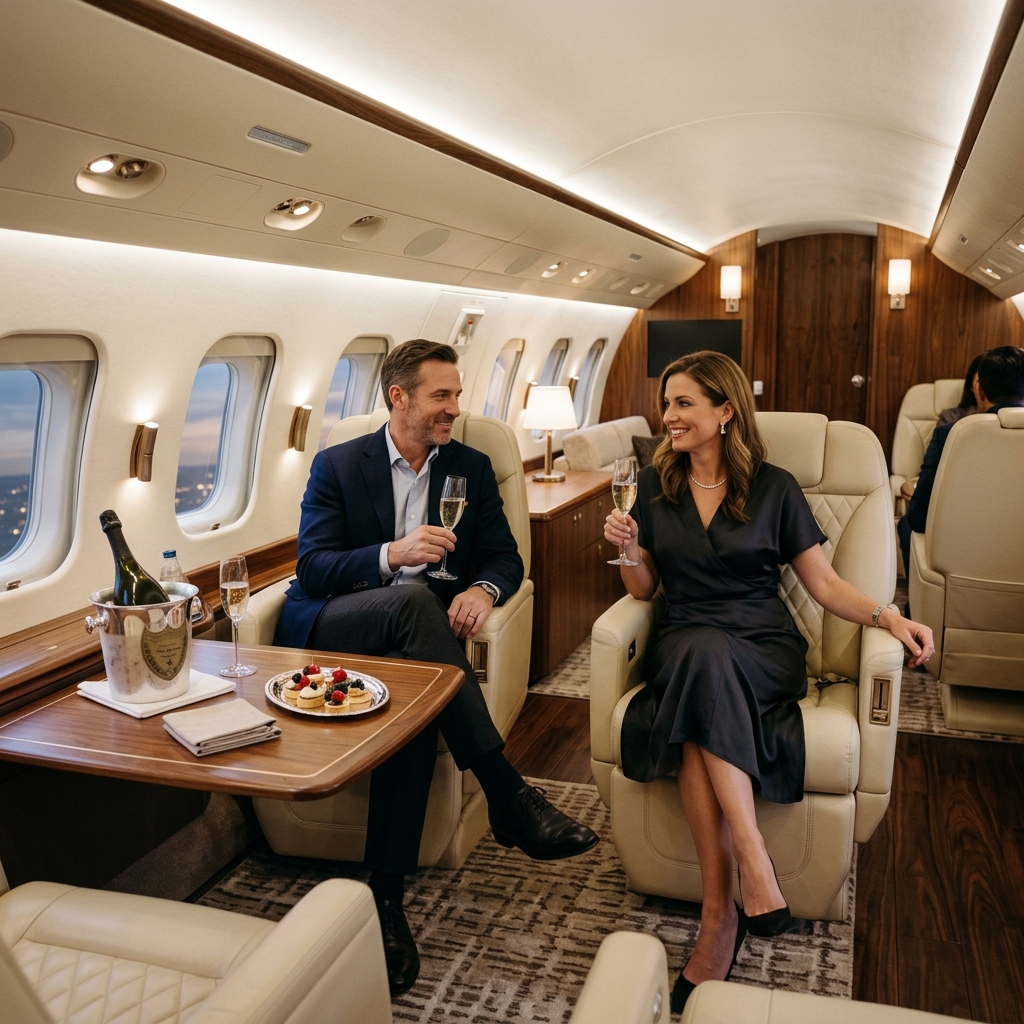
According to the U.S. Bureau of Transportation Statistics, U.S. commercial airlines posted an on-time arrival rate of just 78.1% for the full year 2024, down slightly from 78.34% in 2023. The same report shows that in 2024, airlines reported 437 tarmac delays exceeding three hours on domestic flights alone. Private jets are subject to no such systemic delays.
Comfort and Privacy: A Genuine Look
This is where things get genuinely interesting, because both sides have made significant leaps in recent years.
airlines What First Class Looks Like in 2026
The best commercial first class products in 2026 are legitimately extraordinary. Consider what the top carriers now offer:
- Emirates: Fully enclosed suites on the Boeing 777-300ER with floor-to-ceiling privacy walls, a personal minibar, on-demand dining featuring unlimited caviar, and onboard shower spas on the A380.
- Singapore Airlines: Suites Class with a separate full-length bed, fine linen and feather pillows, and the Book the Cook program allowing passengers to pre-order dishes like lobster thermidor or wagyu beef.
- Etihad Airways: The Residence, a three-room private suite with a living room, separate bedroom, and ensuite shower, available on select A380 flights.
- Japan Airlines: First class on the new A350-1000 featuring only six suites in a 1-1-1 configuration, a 43-inch 4K display, and dedicated tail cameras for in-flight views.
- Lufthansa: The new Allegris suite on the A350-900 with floor-to-ceiling walls, personal climate control, and a Suite Plus option for couples with a full double bed.
According to Skytrax World Airline Awards 2026, these airlines consistently rank among the top first class experiences globally.
lock What Private Offers That First Class Still Cannot
Even the best first class suite shares an aircraft with hundreds of other passengers. Private aviation eliminates this entirely.
- Conversations, calls, and meetings happen without concern for who is listening.
- Children can move freely without disturbing other passengers.
- Meals are prepared specifically for your group, not pulled from a galley cart.
- Schedule changes happen because you need them to, not because an airline's operations center allows them.
- Pets can travel in the cabin with you, without cargo concerns or breed restrictions.
Productivity research consistently shows that executives treat private flight time as working time. The confidentiality of a private cabin means sensitive business discussions, strategy sessions, and live calls are all possible in the air.
Safety Statistics: What the Data Says
According to the Federal Aviation Administration (FAA) General Aviation Safety Fact Sheet 2026, 2024 saw the lowest general aviation fatal accident rate ever recorded.
The FAA's Aviation Priority Goal Action Plan targets general aviation fatal accidents below 0.92 per 100,000 flight hours by September 2026. As of the most recent reporting period, that target is on track.
However, there is an important distinction in the data tracked by the Bureau of Transportation Statistics:
- Part 121: Major commercial airlines operating under the strictest safety standards. Over a ten-year period from 2015 to 2024, Part 121 operations recorded only 3 fatalities.
- Part 135: On-demand charters and commuter operations. These face rigorous regulations but occupy a middle-ground safety profile.
- Part 91: General aviation including private recreational flights. This category accounts for 93%+ of aviation accidents.
Reputable charter companies like those listed with Wyvern or ARG/US certification have safety records that compare favorably to scheduled airlines.
The bottom line on safety: Flying first class on a major commercial carrier is statistically among the safest things a person can do. A well-vetted charter from a certified Part 135 operator is also extremely safe. Avoid unvetted operators and always check certification credentials before booking a private charter.
The Environmental Reality
A landmark study published in Communications Earth and Environment (Nature Publishing Group) analyzed 18.6 million private flights from 2019 to 2023 and found that private aviation emitted at least 15.6 million metric tons of CO2 in 2023 alone — an increase of 46% over just four years.
A 2026 report from the International Council on Clean Transportation (ICCT) estimated that private jets produced up to 19.5 million tonnes of greenhouse gas emissions in 2023, representing nearly 4% of all civil aviation emissions.
According to CBS News reporting on research from Transport and Environment, a person flying private emits 10 to 20 times more carbon pollution than a commercial airline passenger.
| Travel Mode | CO2 Per Passenger |
|---|---|
| Economy Commercial | Baseline (1x) |
| Business / First Class | 2.6x - 9x |
| Private Jet (full charter) | 5x - 14x+ |
Several charter operators now offer sustainable aviation fuel (SAF) blends, carbon offset programs, and more fuel-efficient aircraft. But as of 2026, private aviation's per-passenger carbon cost remains substantially higher than commercial first class.
Who Actually Flies in Each?
According to data analyzed in a 2024 IATA-referenced study on premium travel demographics, C-suite executives and entrepreneurs account for roughly 42% of first class bookings on long-haul international flights. Individuals earning over $250,000 annually are three times more likely to book first class compared to those earning less. That same demographic has increasingly shifted toward private aviation for short and medium-haul routes.
The IATA 2024 World Air Transport Statistics report estimated 116.9 million premium class passengers globally, representing about 6% of all international travelers. Affluent leisure passengers now make up roughly 40% of first class bookings on major international routes, up from just 25% five years prior.
Private jet users are an even more concentrated group. Fewer than 0.003% of the world's population uses private aviation, with approximately 68.7% of all registered private aircraft based in the United States, according to the Communications Earth and Environment study.
Here is a fun (and somewhat staggering) statistic: The top 50 richest billionaires took an average of 184 flights in a single year, according to research cited by National Geographic, generating as much carbon in one year as the average person would in 300 years.
Market Growth: Private Aviation Is Not a Niche Anymore
The business jet market was valued at approximately $95.57 billion in 2024 and is projected to reach $173.99 billion by 2034, growing at a compound annual growth rate of 6.2%, according to Polaris Market Research. The private charter segment specifically was valued at $28.01 billion in 2024.
North America dominates with approximately 44.64% of the global private jet market share in 2026, according to Fortune Business Insights. According to Honeywell's October 2024 aviation outlook, North America is expected to account for around 66% of new jet deliveries by the end of 2026. Statista projects global revenue in the business jets market to reach $24.45 billion in 2026 with around 797 deliveries worldwide.
Meanwhile, Jettly's market analysis notes that in 2026, private jet charter and jet card pricing grew just 1.7%, lagging U.S. inflation for the first time since the pandemic. Stabilizing supply, softer demand, and reduced fuel volatility have created a period of cost predictability for corporate and high-net-worth travelers, making private aviation more accessible than it has been in years.
Fractional Ownership and Jet Cards: The Middle Ground
One category that often gets missed in the private vs. first class debate is fractional ownership and jet card programs. These products sit between outright charter and full ownership, and they have made private aviation significantly more accessible.
Fractional Ownership
Companies like NetJets, Flexjet, and Wheels Up sell shares in specific aircraft. You own a fraction (typically 1/16 to 1/2) of a jet and get a set number of hours per year. Entry costs typically start around $200,000-$500,000 for a small fractional share, plus monthly management fees and occupied hourly rates.
Jet Cards
Jet cards are prepaid blocks of flight hours (usually 25-hour minimums) on a managed fleet. They are popular with travelers who fly 25-50 hours per year privately and want predictable pricing without the commitment of ownership. Pricing tends to run $3,500-$12,000 per hour depending on aircraft category.
On-Demand Charter
For travelers who fly privately fewer than 25 hours per year, on-demand charter through brokers or direct operators often makes the most financial sense. You pay per trip with no recurring costs, maximum flexibility, and access to tens of thousands of available aircraft globally.
Scenario Breakdowns: When to Choose Each Option
Theory is useful, but specifics are better. Here is how the decision plays out across common real-world scenarios:
| Scenario | Best Option | Why | Key Factor |
|---|---|---|---|
| Solo traveler, NYC to London | First Class Commercial | Excellent solo luxury at far lower cost | Cost per seat |
| 8-person exec team, NYC to Chicago | Private Jet | Group cost roughly equal; total time savings huge | Time + group economics |
| Family of 5 with pets, Miami to Bahamas | Private Jet | Pets in cabin, no immigration delays, remote island access | Flexibility + accessibility |
| Couple, 10-day international honeymoon | First Class Commercial | Emirates / Singapore suites are extraordinary; massive cost savings | Budget + experience |
| Time-critical medical or legal situation | Private Jet | Depart immediately, no fixed schedules | Schedule control |
| Corporate retreat, 14 people | Private Jet | Entire team moves together, confidential discussions in-flight | Privacy + logistics |
| Budget-conscious solo business traveler | First Class Commercial | Comparable comfort, dramatically lower cost | Cost efficiency |
The Regulatory and Consumer Protection Side
Commercial airline passengers have robust consumer protections. The U.S. Department of Transportation (DOT) Air Travel Consumer Report is published monthly and covers on-time performance, flight cancellations, mishandled baggage, and consumer complaints. This transparency is something private aviation does not offer at the consumer level, though private passengers are also not subject to overbooking, mishandled baggage, or involuntary denial of boarding.
For private aviation, oversight comes through the FAA's certification of Part 135 operators and a voluntary safety audit system. Resources like the FAA Aviation Data and Statistics page and the NTSB Aviation Accident Statistics are publicly available for travelers who want to research operator safety records before booking.
Practical Tips for Booking First Class and Private Charters
Getting the Most from First Class
- Book early or use miles: Premium cabin award redemptions through programs like Chase Ultimate Rewards, American Express Membership Rewards, or airline-specific programs can dramatically reduce the out-of-pocket cost.
- Use credit card travel benefits: Many premium travel cards include companion upgrades, lounge access through Priority Pass, and companion certificates.
- Check for premium economy as a bridge: Many carriers now offer premium economy seats that provide significant comfort upgrades at a fraction of first class pricing.
- Research airline lounges: The experience begins before you board. Lufthansa's First Class Terminal in Frankfurt, Emirates' Dubai lounge spanning the length of the terminal, and Qatar Airways' Al Mourjan lounge in Doha are destinations in themselves.
Getting the Most from a Private Charter
- Always verify Part 135 certification: Ask for the Air Carrier Certificate number and verify it through the FAA's online registry.
- Check for Wyvern Wingman or ARG/US Platinum ratings: These third-party safety audits are the gold standard for charter quality.
- Consider empty legs: Charter operators frequently offer deeply discounted one-way flights when an aircraft needs to reposition. These can run 50-75% off standard charter rates.
- Book through a reputable broker: Companies like Jettly, FlyUSA, and others maintain networks of vetted operators and carry professional liability coverage.
- Confirm all-in pricing: Fuel surcharges, handling fees, catering, and repositioning costs can add 20-30% to the quoted hourly rate if not clarified upfront.
The Future of Premium Air Travel: What Is Coming
Both private and commercial premium travel are at an inflection point driven by technology, sustainability pressure, and shifting consumer expectations.
Sustainable Aviation Fuel
Both sectors are investing heavily in SAF. Gulfstream delivered its first G700 aircraft to Qatar Executive in January 2026 using an SAF blend. IATA has set targets for commercial aviation to reach net-zero emissions by 2050. SAF currently costs two to four times more than conventional jet fuel but produces up to 80% lower lifecycle carbon emissions.
Electric and Hybrid Aircraft
Several manufacturers are developing electric aircraft intended for short-haul routes. AMSL Aero completed the first free flight of its hydrogen-powered Vertiia aircraft in November 2024, with commercial operations targeted for 2027.
AI-Powered Personalization
Commercial airlines are using AI to personalize in-flight services, from entertainment recommendations to meal preferences remembered across flights. Private operators are integrating similar systems to streamline everything from catering requests to flight briefings.
Supersonic Travel
Bombardier's Global 8000, the fastest civil aircraft after the Concorde with a maximum speed of Mach 0.94 and a range of 8,000 nautical miles, is expected to enter service in the second half of 2026. Boom Supersonic's Overture commercial aircraft targets similar performance for scheduled airlines.
Final Verdict: Private Jet vs First Class
After going through all of it: cost data, safety statistics, environmental research, comfort comparisons, and real-world scenarios, here is where this lands.
There is no universal winner in the private jet vs first class debate because the right answer depends entirely on your situation. For solo or duo travelers on long international routes, the world's best first class cabins on Emirates, Singapore Airlines, or Japan Airlines offer an extraordinary experience at a fraction of the private cost. The math simply does not favor private for two people flying Tokyo to New York when you can book a suite for $5,000 and arrive in a bed with Lalique toiletries.
For groups, time-critical travel, routes to secondary airports, or situations where privacy and schedule control are non-negotiable, private aviation wins decisively. The per-person cost gap closes quickly with group size, and the productivity and flexibility gains are real.
The environmental consideration is one that each traveler has to weigh personally. Private aviation carries a significantly higher per-passenger carbon cost than commercial, and that is a documented fact backed by peer-reviewed research.
Our Recommendation for 2026:
If you are traveling solo or as a couple internationally, invest in the best first class seat you can book, ideally with miles or points to reduce the out-of-pocket cost. The experience from Emirates, Singapore, or Qatar rivals a private jet in many ways. If you are moving a group of six or more, running on a tight schedule, traveling to a location near a smaller airport, or need true confidentiality in the air, charter a private jet. Use a certified Part 135 operator with a recognized safety audit rating, confirm all-in pricing upfront, and consider offsetting your carbon footprint if environmental impact matters to you. Either way, you are choosing the pointy end of the aviation experience, and that is worth enjoying.
Sources and Official References
Government and Regulatory Sources
Federal Aviation Administration (FAA) - Aviation Data and Statistics
FAA General Aviation Safety Fact Sheet 2026
FAA Priority Goal Action Plan FY2024 Q2 - Aviation Safety
U.S. Department of Transportation - Air Travel Consumer Reports 2024
Bureau of Transportation Statistics - Air Travel Consumer Report December 2024 / Full Year 2024
Bureau of Transportation Statistics - U.S. General Aviation Safety Data
Research and Academic Sources
Communications Earth and Environment (Nature) - Private Aviation CO2 Emissions 2019-2023
International Council on Clean Transportation (ICCT) - Air and GHG Pollution from Private Jets, 2023
ICCT Press Release - Private Jets Emitted More Climate Pollution Than All Heathrow Flights in 2023