
There is something quietly extraordinary about stepping off a private jet and straight into one of the world’s most breathtaking locations, no baggage carousels, no middle seats, no three-hour layovers in a crowded terminal. For Australian travelers, private aviation has gone from a fringe luxury to a fast-growing reality. Private jet travel in Australia grew by 28% between 2020 and 2024, now accounting for roughly 13% of domestic travel activity, according to industry data from Blacklane’s private aviation research.

Globally, the private jet charter market was valued at approximately USD 28 billion in 2024 and is forecast to climb to nearly USD 41 billion by 2032, growing at a compound annual growth rate of around 4.9%, according to Dataintelo’s Private Jet Charter Market Report. And Australia, which recorded 44,448 private jet departures in 2024, sits in the top five countries globally for private flight activity, based on Private Jet Card Comparisons data.
So where should you actually go? Whether you are traveling for business, a milestone celebration, a family adventure, or simply because you have decided life is too short for economy class, this guide covers the top luxury destinations reachable by private jet from Australia. Airports, flight times, what to do when you land, and the intel that actually matters.
Australia’s geography is its biggest gift and its biggest challenge. The country spans a continent, and the cities that matter most for international travel, Sydney, Melbourne, Brisbane, Perth, sit anywhere from three to five hours apart from each other. Adding an intercontinental leg to that means commercial travel can consume an entire day before you even reach your destination.
Private jet charter changes that calculation entirely. From Sydney, a long-range jet like the Gulfstream G650ER or Bombardier Global 7500 can reach Singapore in about eight hours, Bali in six, Dubai in around 13 hours, and Tokyo in nine. With a stop for fuel, Europe becomes a genuine one-trip option rather than a two-day ordeal.
All private jet charter operators in Australia must hold an Air Operator’s Certificate (AOC) issued by the Civil Aviation Safety Authority (CASA), Australia’s aviation safety regulator. CASA operates under the Civil Aviation Safety Regulations 1998 (CASR), which covers aircraft airworthiness, pilot licensing, safety management, and crew training. For international charter flights, additional approvals come from the Department of Infrastructure, Transport, Regional Development, Communications and the Arts. When booking any charter, always confirm your operator holds a current and valid AOC.
Australian private jet hubs include:
Remote destinations like Alice Springs Airport, Broome International Airport, and Uluru’s Ayers Rock Airport are also fully accessible by private jet, opening up outback experiences that simply are not practical by commercial travel.
Flight time from Sydney: approximately 6 hours. Nearest private jet airports: Ngurah Rai International Airport (DPS).
Bali is one of the most logical first international stops for Australian private jet travelers. It sits close enough to warrant the flight even on a long weekend, yet the island rewards longer stays generously. The combination of spiritual culture, volcanic landscapes, world-class surf, and an increasingly elite resort scene has made Bali a staple on the global luxury travel circuit.
Ubud’s terraced rice fields and meditation retreats draw a different crowd than the beach clubs of Seminyak, but private jet travelers get to experience both in one trip. Resorts like the Four Seasons Sayan, Amandari, and Alila Villas Uluwatu are consistently cited among Asia’s finest properties.
Best time to visit: April to October, during Bali’s dry season. Avoid peak Nyepi (Balinese New Year) if you want access to the airport, as the island observes a full 24-hour silence and the airport closes.
Flight time from Sydney: approximately 11 to 12 hours (with a refueling stop). Nearest private jet airports: Ibrahim Nasir International Airport (MLE), with seaplane or yacht transfers to individual resort islands.
The Maldives is consistently ranked as the top honeymoon and luxury getaway destination for private jet travelers globally. The archipelago consists of 1,192 coral islands scattered across the Indian Ocean, the majority of which are either uninhabited or host a single exclusive resort. Every resort in the Maldives operates on its own private island.
What makes private jet access to the Maldives genuinely superior to commercial travel is the transition from arrival to resort. You clear customs once, board a seaplane or private speedboat transfer, and arrive directly at your overwater villa. No luggage claim, no departure hall queue, no shared ferry with 60 strangers.
Iconic properties include Soneva Jani, Conrad Maldives Rangali Island (which offers an underwater bedroom suite), and Hurawalhi Island Resort, home to the world-famous 5.8 Undersea Restaurant, the largest all-glass undersea restaurant on the planet.
Best time to visit: November through April. The northeast monsoon season keeps skies clear and seas calm.
Flight time from Sydney: approximately 9 to 10 hours. Nearest private jet airports: Narita International Airport (NRT) and Haneda Airport (HND).
Japan has quietly become one of the most requested private jet destinations in the Asia-Pacific region. Tokyo alone recorded a 40% increase in charter bookings between January and September 2024 compared to the year before, according to data from Air Charter Service, published in the Grand View Research Business Jet Market Report.
Tokyo blends tradition with extraordinary modern elegance. Narita and Haneda both accommodate private jets with full customs facilities. Kyoto, reachable by bullet train from Tokyo in just over two hours, offers a completely different experience: ancient temples, traditional ryokan guesthouses, kaiseki cuisine, and bamboo forest walks that have no equivalent elsewhere on Earth.
Private jet travelers have the particular advantage of flying into Japan without the peak-season commercial flight chaos that has made Tokyo a logistical challenge in 2024 and 2025.
Best time to visit: March to April for cherry blossom season (book private jet slots at least three months ahead), or October to November for autumn foliage.
Flight time from Sydney: approximately 7 to 8 hours. Nearest private jet airports: Seletar Airport (XSP) for private aviation, with Changi Airport (SIN) also available.
Singapore ranks alongside Tokyo as one of the top two private jet arrival cities in Asia, driven by its role as a financial hub, its world-class dining and shopping scene, and its position as a transit gateway to the rest of Southeast Asia.
For business travelers, Singapore offers unmatched infrastructure. For leisure, the city punches well above its geographic weight, with the Marina Bay Sands, Raffles Hotel, the Botanic Gardens (a UNESCO World Heritage Site), and a restaurant scene that holds more Michelin stars per capita than almost any city on Earth.
Singapore also works well as a staging point for a private jet multi-stop itinerary through Southeast Asia, pairing with Phuket, Bali, or Vietnam’s Da Nang on the same trip.
Best time to visit: February to April. Singapore is warm year-round, but the northeast monsoon eases off in this window, with lower humidity and less rainfall.
Flight time from Sydney: approximately 13 to 14 hours (ultra long-range jets can do this non-stop). Nearest private jet airports: Al Maktoum International Airport (DWC) and Dubai International Airport (DXB).
Dubai has built its entire modern identity around luxury, and private jet infrastructure is central to that story. Al Maktoum International Airport has purpose-built facilities for private aviation and was designed to handle enormous volumes of business jet traffic. No city on Earth offers a smoother private jet arrival experience for high-net-worth travelers.
The appeal beyond airports is equally strong. The Burj Khalifa remains the world’s tallest building. Desert safari experiences north of the city are unlike anything else in the region. The dining scene, from Nobu to At.mosphere at 122 floors above ground, is exceptional. And the shopping, at the Dubai Mall with its 1,200-plus stores, is a destination in itself.
Dubai also serves as a gateway into Europe, Africa, and the Middle East, making it a practical layover for Australian travelers on extended itineraries.
Best time to visit: November through March, when temperatures are pleasant. Summer temperatures can exceed 45°C and outdoor activities become very limited.
Flight time from Sydney: approximately 21 to 23 hours, typically with a fuel stop in Dubai or Singapore. Nearest private jet airports: Nice Cote d’Azur Airport (NCE), with Monaco Heliport for direct helicopter transfers.
The French Riviera is arguably the most iconic private jet destination on the planet, and for good reason. Nice, Cannes, and Monaco together form a playground for the wealthy that has been running at full prestige since the 1920s. The combination of Mediterranean beaches, high-end boutiques, Michelin-starred restaurants, and yacht-lined harbors is impossible to replicate anywhere else.
Monaco, just 20 minutes by helicopter from Nice airport, sits on 2.02 square kilometers and packs in more luxury per square meter than any sovereign nation on Earth. The Monaco Grand Prix in May is one of the hardest event tickets to obtain legitimately, making private jet access essential for anyone serious about attending. The Monaco Yacht Show in September draws the world’s most extraordinary superyachts.
Nice Airport handles heavy jets and has become one of the top five private jet airports in Europe by volume. Cannes Mandelieu Airport (CEQ) is a popular alternative for Cannes Film Festival travelers.
Best time to visit: May through September for beach season. May is Grand Prix month. July and August are peak season, so book private jet slots and accommodation at least six months ahead.
Flight time from Sydney: approximately 22 to 24 hours with stops. Nearest private jet airports: Florence Peretola Airport (FLR), Pisa International Airport (PSA), and Grosseto Airport for southern Tuscany.
Tuscany rewards private jet access in a way that commercial travel simply cannot replicate. Florence Peretola is a compact airport, and the city center sits just 5 km from the terminal. No baggage wait, no long transfer, straight into the heart of Renaissance Italy.
The region offers rolling hills, centuries-old vineyards, and a quality of life so deeply embedded in its landscape that Tuscany has its own cultural gravity. A private villa rental in Chianti or Val d’Orcia, where you control the schedule entirely and wake up to views that look like Renaissance paintings, is one of the genuinely unmatched luxury travel experiences in the world.
Wine tourism in Tuscany, particularly in the Brunello di Montalcino and Chianti Classico regions, pairs naturally with private jet travel since you are not constrained by a commercial return flight.
Best time to visit: April to June and September to October. Summer harvest season in September is one of the most atmospheric times to visit the vineyards.
Flight time from Sydney: approximately 24 to 27 hours with stops (typically via Los Angeles or Dallas). Nearest private jet airports: Gustaf III Airport (SBH).
St. Barts is the Caribbean destination of choice for those who want isolation, authenticity, and world-class service in equal measure. The island blends French sophistication with Caribbean warmth and has maintained a strict development philosophy that keeps it less commercialized than Barbados or Nassau.
Gustaf III Airport at St. Barts is one of aviation’s most famous approaches. The runway is short, the terrain is steep, and only specially certified pilots are permitted to land. For private jet travelers, this means not all aircraft can access the island directly, and it is worth confirming your operator’s certification before booking. Small turboprops and light jets are the typical aircraft for the final leg from Sint Maarten’s Princess Juliana Airport.
The island’s beaches, particularly Saline and Colombier, are consistently ranked among the Caribbean’s finest. The dining scene, given the French influence, is exceptional.
Best time to visit: December through April. New Year’s Eve on St. Barts is legendary among the ultra-high-net-worth travel circuit, though accommodation and charter prices reflect that.
Flight time from Sydney: approximately 20 to 22 hours with stops. Nearest private jet airports: Santorini Thira Island Airport (JTR).
Santorini’s iconic caldera views, blue-domed churches, and volcanic black sand beaches have made it one of the most photographed places on Earth. For private jet travelers, the appeal is the ability to bypass the intense summer crowding that plagues the island’s commercial flight windows.
Thira Airport can accommodate a range of private jet sizes and offers dedicated facilities for crew and passengers. From the airport, a short transfer brings you to Oia or Fira, where cliffside cave hotels like Canaves Oia Epitome or Grace Santorini sit at the top of every luxury accommodation ranking.
Private yacht charters are a natural extension of a Santorini stay, allowing you to explore the caldera, nearby islands like Naxos and Paros, and secluded coves not accessible by road.
Best time to visit: May to June and September to October. July and August are the peak commercial tourist months. Arriving and departing privately gives you some insulation from the crowds, but the roads and restaurants are still genuinely busy.
Flight time from Sydney: approximately 3 hours. Nearest private jet airports: Queenstown Airport (ZQN).
Queenstown is the closest ultra-luxury destination to Australian capitals and arguably the most underrated on this list. The Southern Alps provide a dramatic backdrop for an airport arrival that has no parallel in the region. In winter, the ski fields of Remarkables and Coronet Peak sit within 30 minutes of the city center. In summer, the options shift to jet boating, bungee jumping at the original Kawarau site, and some of New Zealand’s finest fine dining.
The private jet scene at Queenstown has grown substantially, with the airport now ranking among New Zealand’s busiest for business aviation. Milford Sound, one of the most dramatic fjord landscapes on Earth, sits just 90 minutes by road or a short scenic flight away.
For Australian travelers, Queenstown works exceptionally well as a winter escape when Australian ski resorts are fully booked, and equally well in summer as a hiking and adventure base. The luxury lodge scene, particularly at Matakauri Lodge and Azur Lodge, is world-class.
Best time to visit: June through August for skiing. December through March for adventure and hiking. Queenstown works year-round.
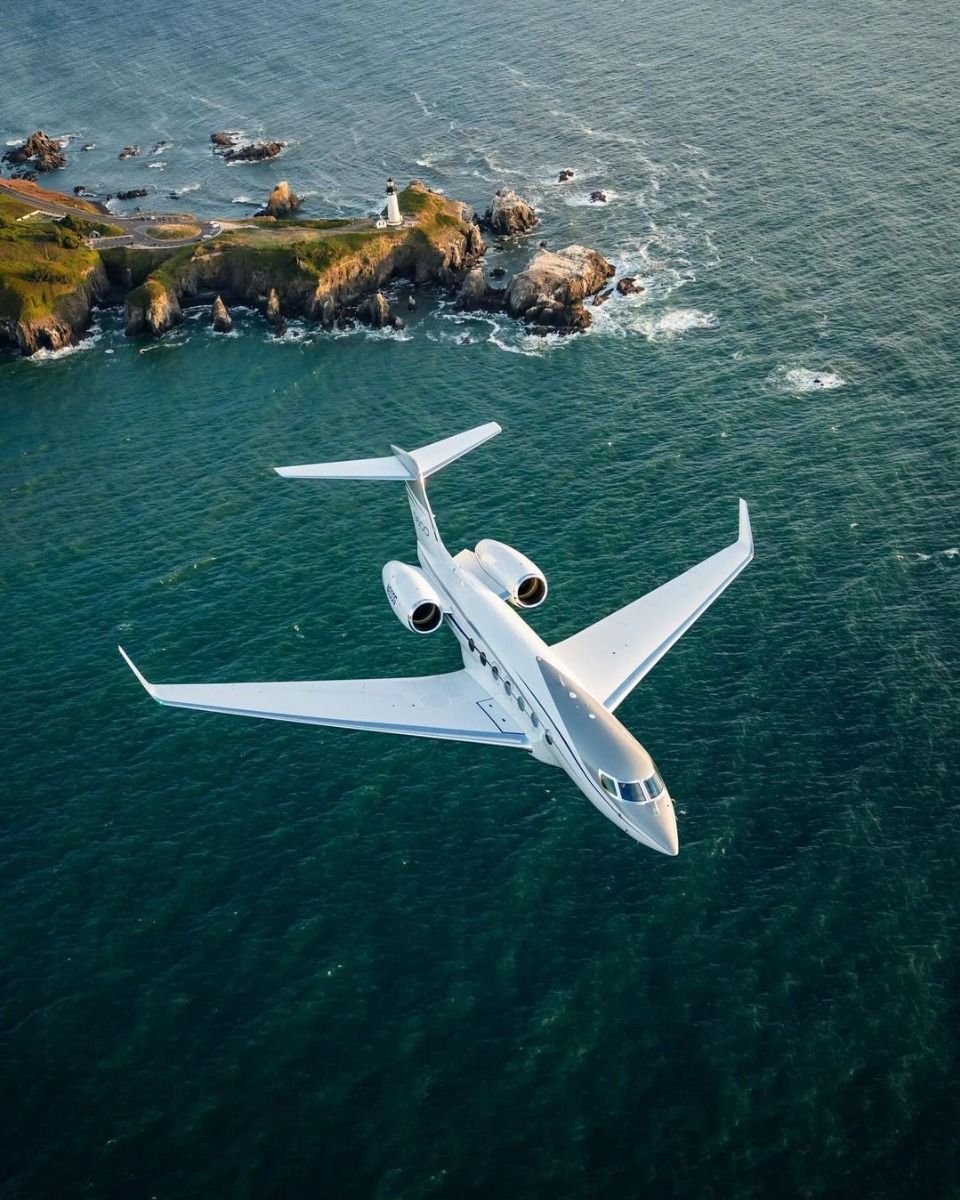
Not every private jet can reach every destination from Australia. The distances involved in intercontinental travel from a continent that sits at the bottom of the world mean that aircraft range is a central consideration.
According to Grand View Research, the large business jet segment held a 48.1% revenue share of the global market in 2024, reflecting the growing preference for longer-range aircraft capable of connecting major cities non-stop.
Private jet pricing is not a single number, it depends on aircraft type, route, season, positioning costs, crew overnight fees, and catering. But here are some realistic reference points for flights departing Australia:
Empty leg flights, where an aircraft is repositioning without passengers, can reduce costs significantly for flexible travelers. Fractional ownership programs and jet cards through operators like NetJets and VistaJet are also worth exploring for frequent fliers. Mordor Intelligence’s Private Jet Charter Market Report notes that subscription and jet-card programs are forecast to grow at a 9.63% CAGR through 2031, signaling strong market acceptance of these flexible models.
Australia’s private aviation industry operates within a rigorous regulatory framework. The Civil Aviation Safety Authority (CASA) is the government body responsible for licensing pilots, registering aircraft, certifying aerodromes, and overseeing operational safety. CASA’s regulatory foundation is the Civil Aviation Act 1988 and the Civil Aviation Safety Regulations 1998.
Key points for private jet charter passengers in Australia:
The Australian Transport Safety Bureau (ATSB) serves as the independent investigator of aviation accidents and safety incidents. Airservices Australia manages air traffic control across Australian airspace.
Australia’s Aviation White Paper: Towards 2050 outlines the government’s long-term aviation strategy, including a $40 million investment in the Regional Airports Program over three years, signaling a commitment to expanding access across the country.
Environmental impact is a genuine and legitimate conversation in private aviation. A single private jet flight produces more CO2 per passenger than commercial travel. The industry is responding, but the solutions are still in early stages.
Key developments worth knowing:
If this matters to you, ask your charter operator directly about their SAF sourcing, offset programs, and fleet modernization plans before booking.
The process is more straightforward than many people expect.
Private jet travel from Australia is genuinely expansive. The distances are real, the costs are significant, and the aircraft options matter. But the experience, and the time returned to you on the other end, is genuinely compelling for the right trip and the right traveler.
If I were planning an itinerary today, I would put Bali and Queenstown at the top of the list for Australian-based travelers looking for a quick, high-impact escape with minimal complexity. For a once-in-a-decade trip, a private jet tour combining the French Riviera, Tuscany, Santorini, and a final stop in the Maldives on the way home would be the standard I would set. The Four Seasons Private Jet and TCS World Travel itineraries are worth a serious look if you prefer a curated group experience. If you prefer the flexibility and control of a chartered aircraft on your own schedule, work with a CASA-certified operator, confirm your AOC, and start with a route you know will be worth every dollar of the journey.