
Empty Leg Flights Australia Cost Guide: Real Prices, Routes & How to Fly Private for Less
Everything you need to know about empty leg flights in Australia, from how they work and what they cost to the risks, the best routes.
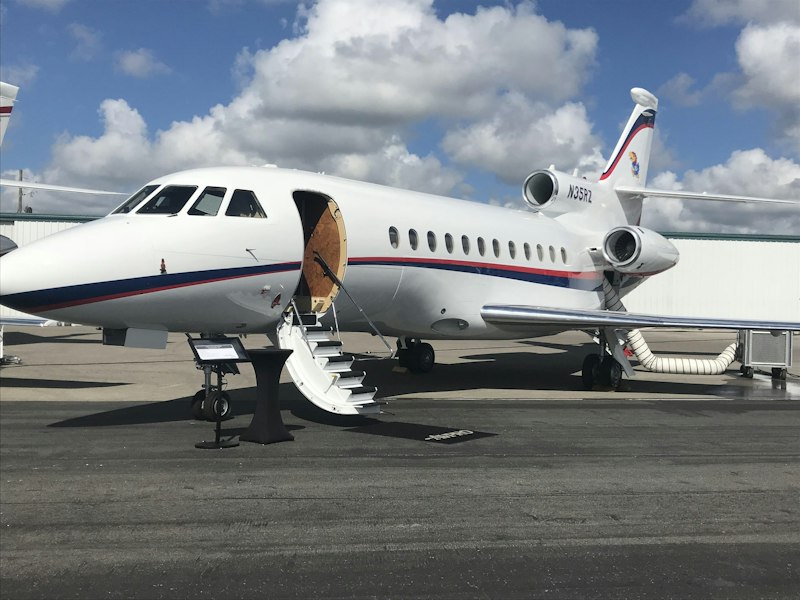
Private Jet Empty Leg Flights Explained
Watch this quick guide to private jet empty leg flights, then use the pricing and savings information below to compare your options.
- What Are Empty Leg Flights? The Plain-Language Explanation
- Empty Leg Flights Australia Cost: Route-by-Route Pricing
- How Empty Leg Pricing Is Set and What Affects It
- Honest Pros and Cons: What Nobody Tells You
- Cancellation Risks and How to Protect Yourself
- Where to Find Empty Leg Flights in Australia
- How to Book: A Step-by-Step Walkthrough
- CASA Regulations and Your Passenger Rights
- Industry Statistics Worth Knowing
- Interactive Empty Leg Savings Calculator
- My Recommendation

What Are Empty Leg Flights? The Plain-Language Explanation
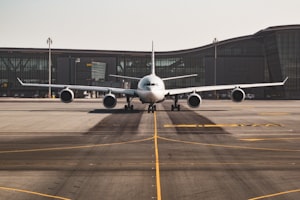
When a private jet is chartered for a one-way trip, the aircraft has to go somewhere after it drops off its passengers. If it needs to return to its home base or reposition for the next booking, it flies that sector without any revenue-generating passengers on board. That repositioning flight is called an empty leg, also known in the industry as a dead leg, ferry flight, or deadhead flight.
The economics are straightforward. The operator is paying for fuel, crew, maintenance, and airport fees regardless of whether you are on board. By offering the empty leg to a paying passenger at a discount, the operator recovers some of those fixed costs, and you get to experience private aviation at a fraction of the standard charter price. Both sides win.
"A mining executive charters a Challenger 604 from Sydney to Perth. After dropping the client, the aircraft returns to its Melbourne base. The operator lists the Melbourne-bound leg at AUD $9,500 for up to 10 seats. Four friends split that cost at $2,375 each — the standard charter would be $30,000+."
Empty legs have been part of private aviation for decades, but awareness among Australian travellers has grown sharply in recent years. Google searches for empty leg flights surged 120% during 2023, reflecting a much broader understanding of how this pricing works and who it is available to. The idea that private jets are strictly the domain of billionaires has been slowly dismantled by the empty leg market.
Empty Leg Flights Australia Cost: Route-by-Route Pricing
The empty leg flights Australia cost starts from as low as AUD $2,500 for short domestic routes on a small jet and can reach AUD $21,000+ for interstate sectors on heavy aircraft. Pricing is set per aircraft, not per seat, so splitting the cost between multiple passengers is where the real value emerges.
Below are real-market price examples drawn from Australian operator listings and industry data for 2025–2026. These are per-aircraft prices, not per-person figures.
| Route | Aircraft | Seats | Empty Leg Price (AUD) | Standard Charter Est. | Saving |
|---|---|---|---|---|---|
| Sydney – Brisbane | PC-24 | 6 | $6,200 ex GST | ~$14,000 | ~56% |
| Melbourne – Sydney | Praetor 500 | 6 | $8,500 ex GST | ~$20,000 | ~57% |
| Sydney – Melbourne | Challenger 604 | 10 | $9,500 ex GST | ~$24,000 | ~60% |
| Brisbane – Melbourne | Praetor 500 | 8 | $11,000 ex GST | ~$28,000 | ~61% |
| Cairns – Gold Coast | Citation CJ2 | 6 | $6,000 ex GST | ~$16,000 | ~62% |
| Auckland – Sydney | Challenger 604 | 10 | $21,000 | ~$50,000 | ~58% |
| Melbourne – Los Angeles | Gulfstream 650 | 13 | Price on request | $250,000+ | Varies |
| Short domestic (any 4-seat jet) | Various light jets | 4 | From $2,500 | ~$8,000–$12,000 | Up to 79% |
All Prices Are Per Aircraft
Every price above covers the entire aircraft, not a single seat. A $9,500 Challenger 604 empty leg from Sydney to Melbourne divided between 9 passengers costs AUD $1,056 per person. That is comparable to, or less than, a last-minute economy return ticket on the same route when you factor in time saved at the airport.
What About International Empty Legs to or from Australia?
International empty legs do appear on routes like Sydney–Bali, Melbourne–Fiji, Perth–Singapore, and occasionally trans-Pacific sectors on Gulfstream-class aircraft. These are less common than domestic legs, but the savings are proportionally larger because the base charter prices are much higher. An international empty leg on a heavy jet can save AUD $50,000–$200,000+ compared to a standard charter. Availability is unpredictable and windows to book are short, often 24–72 hours.
How Empty Leg Pricing Is Set and What Affects It
Empty leg prices are not calculated on a simple formula. Here is what drives the price up or down:
Distance and fuel cost: The longer the sector, the higher the fuel bill the operator is trying to partially recover. A 400 km hop between Sydney and Canberra will cost far less than a 2,700 km repositioning from Perth to Melbourne.
Aircraft type and size: A light jet burns less fuel and carries lower operating costs than a Challenger or Gulfstream. Empty leg prices reflect the aircraft's hourly operating cost even at a discount.
How much notice is available: An empty leg with 72+ hours' notice is more valuable to the operator because they have time to market it and fill the seats. Last-minute empty legs (available with under 12 hours' notice) are often priced lower because the window to sell them is narrow. Prices can sometimes be negotiated downward on very short-notice legs.
Demand on the route: The Sydney–Melbourne corridor is Australia's busiest private aviation route, which means empty legs appear frequently but also sell quickly. Less-travelled routes between regional centres may carry steeper discounts because the operator has a smaller pool of interested passengers.
Time of year: During peak season periods around major events, the Melbourne Cup, the AFL Grand Final, school holidays, and Christmas, operators have less incentive to discount because demand for standard charter is high. Empty legs from peak-demand periods can sell at near-standard rates. Off-season repositioning flights in late summer and mid-winter are where the deepest discounts appear.
Honest Pros and Cons: What Nobody Tells You
Advantages
- Savings of 25–75% vs full charter
- Same aircraft, same service, same crew standards
- All seats on the aircraft are yours
- No shared cabin, complete privacy
- Flexible departure airports, including private terminals
- Pet-friendly (confirm with operator per aircraft)
- Opportunity to access jets normally out of budget
- Catering available with enough notice (3–4 hour lead time)
- CASA safety standards still fully apply
- Good option for groups where cost is split
Disadvantages
- One-way only, return must be arranged separately
- Schedule is fixed by primary charter, not by you
- Can be cancelled if primary client changes plans
- Short booking window, often 24–72 hours
- Limited aircraft choice
- Cannot guarantee exact departure time until close to departure
- May land at smaller airports without commercial alternatives nearby
- Peak season discounts shrink significantly
- No SLA to get you to your destination if cancelled
Cancellation Risks and How to Protect Yourself
The single most important thing to understand about empty leg flights is that they are dependent on the primary charter that created them. If the primary client changes their plans, postpones, or cancels, the empty leg disappears. There is no obligation on the operator to source a replacement aircraft for you at the same price.
Key Cancellation Scenarios
- The primary charter client cancels or postpones their trip. Your empty leg is cancelled immediately.
- The primary charter departs earlier or later than planned. Your timing shifts accordingly, and you may have little warning.
- A mechanical issue grounds the aircraft. A replacement may cost significantly more at short notice.
- Weather diverts the primary charter to a different airport, changing your departure point.
None of this means empty legs are not worth booking. Millions of them are completed without incident every year. But the risk profile is real and needs to be managed with a clear plan.
How to protect yourself: Always have a backup plan, especially for time-critical trips. For major events, court appearances, medical appointments, or any situation where missing a flight has serious consequences, a standard charter or commercial booking is the safer choice. For leisure travel or flexible business travel, the savings from an empty leg far outweigh the risk for most people.
Some operators, like Airly/EmptyJets, offer refunds of the booking cost (minus payment processing fees) if the flight is cancelled. Always confirm the refund policy before you pay, and get it in writing.
Where to Find Empty Leg Flights in Australia
The landscape for finding Australian empty legs has changed significantly over the past five years. What once required knowing an aviation broker personally is now accessible through several digital platforms and operator alert systems.
Airly / EmptyJets
Australia's most active aggregator for empty leg flights. Prices start from AUD $2,500 for short domestic routes. Bookable via the Airly app. The EmptyJets Facebook page has 53,000+ followers and posts deals in real time.
FlightCharter.com.au
CASA-licensed Australian broker with an active empty leg listing page. Flights posted with exact pricing, departure times, and aircraft details. Has published live deals from AUD $6,000–$11,000 ex GST on popular eastern seaboard routes.
GoJets
Australian-based operator with dedicated empty leg alert subscriptions. Focuses on major domestic city pairs including Sydney, Melbourne, Brisbane, and Perth. Publishes seasonal promotions for empty leg packages.
ACAM Pacific
Offers empty jet flights at around 30% of the standard charter cost. Provides SMS text alerts for available empty legs. Active on routes across Australia and the South Pacific including Fiji and New Zealand sectors.
Skyler Aviation
Publishes empty legs on their website with regular updates. Up to 75% savings on standard charter rates. Based in Australia with domestic operations across major city pairs.
Empty Jet Finder / Air Charter Group
Membership-based platform offering exclusive access to available private jet empty legs. Claims prices as low as 10% of the standard rate for members. Allows alerts to be customised by departure airport and destination.
Best Practice: Subscribe to Multiple Platforms
No single platform has visibility across every available empty leg in Australia. Register for SMS and email alerts from at least 3–4 operators simultaneously. The best deals on high-demand routes like Sydney–Melbourne or Brisbane–Gold Coast sell within hours of being listed. Passive browsing is far less effective than active alert subscriptions.
How to Book an Empty Leg Flight in Australia: Step by Step
Follow these six steps to find, verify, and book your empty leg flight with confidence.
Pro Tip
Set alerts for the routes you travel most. The best deals on high-demand routes like Sydney–Melbourne or Brisbane–Gold Coast sell within hours. SMS alerts beat email — by the time you check your inbox, the deal may be gone.
CASA Regulations: What Applies to Empty Leg Flights
Empty leg flights are commercial operations and are subject to exactly the same regulatory requirements as any other chartered flight in Australia. There is no reduced safety standard just because the price is lower.
Under CASA's consumer guidance, any operator transporting passengers commercially must hold an Air Operator's Certificate (AOC). The same crew licensing, maintenance standards, safety management systems, and insurance requirements apply whether you paid AUD $2,500 or AUD $25,000 for the sector.
What CASA Requires of Every Charter Operator
- A valid Air Operator's Certificate (AOC) issued by CASA under CASR Part 119
- Commercial Pilot's Licence (CPL) for all flight crew at minimum, with many holding the higher ATPL qualification
- Aircraft maintained to commercial airworthiness standards under CASR Part 42
- Safety Management Systems (SMS) in place for all AOC holders
- Drug and alcohol testing programs for crew
- Flight crew fatigue management under CAO 48.1
- Carriers' Liability Insurance covering passengers for injury or death
One critical point: the company that sold you the empty leg may not be the company holding the AOC. Brokers sell empty legs on behalf of operators. Always ask which AOC holder is the legal operator of the flight, and verify that entity's certificate is current on the CASA website.
Industry Statistics Worth Knowing
Understanding the broader market context helps you appreciate both why empty legs exist and how the Australian private aviation industry is changing.
Australia's fleet size: Australia is the second-largest business aviation market in the Asia-Pacific region, with approximately 230 business aircraft. That fleet has grown by around 10% over the past five years, with a notable shift toward larger, more capable aircraft that can fly internationally. More aircraft mean more repositioning flights and, by extension, more empty leg opportunities.
Global charter market growth: The global jet charter market was valued at approximately USD $21.24 billion in 2024 and is projected to reach USD $24.28 billion in 2025. Global business jet activity increased year-over-year by 8% during the first quarter of 2025, according to WingX data. The Asia-Pacific region, which includes Australia, is forecast to be among the fastest-growing segments through to 2032.
Rising demand for empty legs specifically: Google searches for empty leg flights surged 120% in 2023. Many operators and platforms report new clients, particularly those who first encountered private aviation during the pandemic-era period when commercial aviation was disrupted, are now establishing empty leg travel as a regular part of their schedules.
Demographics are shifting: The average age of fractional ownership customers at major operators has dropped by roughly a decade according to recent industry surveys. First-time private flyers are younger and more price-conscious, which makes the empty leg market directly relevant to a broader audience than ever before.
Environmental context: A private jet emits up to 20 times more CO2 per passenger than a commercial flight when flying at low occupancy. When an empty leg is filled with passengers, those emissions are shared across the group and the environmental cost per person drops substantially. Some operators now include SAF (Sustainable Aviation Fuel) offsets as part of their empty leg pricing, which may be relevant to corporate travellers with ESG reporting requirements.
Empty Leg Savings Calculator
Enter your route and group details to see your estimated empty leg cost and per-person breakdown.
Estimates based on 2025–2026 Australian market data. Actual pricing varies by operator, aircraft availability, and route. All prices are per aircraft, in AUD, excluding GST unless stated. Always obtain a formal quote from a CASA-licensed operator before booking.
Trust the Numbers
This calculator uses real Australian market data from 2025–2026 operator listings. Every estimate is based on actual per-aircraft pricing, not marketing numbers.
My Recommendation
After reviewing pricing data, operator terms, and the risk profiles from multiple Australian and international sources, here is my honest take on whether empty leg flights are right for you.
I recommend empty leg flights strongly for anyone who travels regularly between major Australian city pairs, has schedule flexibility of at least half a day either side of their ideal travel time, and is flying with at least 2–3 others to split the cost. On routes like Sydney–Melbourne, Brisbane–Gold Coast, or even Melbourne–Perth, the savings versus commercial business class can be substantial, and the experience of a private terminal is genuinely worth trying at least once.
I would caution against booking an empty leg for any trip where timing is non-negotiable. Court dates, medical procedures, critical client presentations, and connecting international flights are all scenarios where the cancellation risk of an empty leg could cause serious problems. For those trips, a standard charter or commercial booking is the smarter choice.
The single most important practical step you can take today is to register with at least three Australian operators for SMS alerts. The best deals are gone within hours of being posted, and passive browsing will not get you the lowest prices. Sign up, set your preferred routes, and wait. The right deal will come to you.
Always verify your operator's CASA AOC before paying. The standard is the same regardless of the discounted price, and flying with an accredited operator protects you both legally and in terms of actual safety. Verification is free and takes two minutes at casa.gov.au.