
Private Jet Sizes Explained
(Light, Midsize, Heavy Jets)
From 4-seat city hoppers to 19-passenger intercontinental flagships, here is everything you need to know before booking your next flight.

All aircraft drawn to relative scale
Runway reference line — all aircraft shown nose-right, to proportional length scale
Private Jet Sizes Explained (Light, Midsize, Heavy Jets)

Not all private jets are created equal, and the size difference between a very light jet and an ultra-long-range heavy jet is roughly the same as the difference between a studio apartment and a four-bedroom house with a conference room. That gap matters enormously when you are choosing the right aircraft for a specific trip.
The private aviation industry groups business jets into five main categories based on cabin volume, range, passenger capacity, and maximum takeoff weight (MTOW). The Federal Aviation Administration (FAA) classifies these aircraft under 14 CFR Part 135 for charter operations and Part 25 for transport-category airworthiness standards. The FAA defines a transport-category jet as any aircraft with 10 or more seats or an MTOW greater than 12,500 pounds, which covers virtually every private jet above the very-light tier.
Why does jet size matter for booking?
The category you choose determines your nonstop range, how many bags you can bring, whether you can access smaller regional airports, and what your hourly charter rate will be. A light jet might run $2,500–$3,500 per hour while a heavy jet can exceed $12,000 per hour — before fuel, landing fees, and crew costs.
The business jet market is valued at approximately $95.6 billion globally and is projected to reach $174 billion in coming years, growing at a compound annual growth rate of 6.2%. North America dominates with over 45% of global market share, and the midsize segment currently holds the largest individual revenue share thanks to its balance of range, comfort, and operating cost.
Below is a clear, research-backed breakdown of every major size category, including real aircraft examples, cabin dimensions, honest range data, and the trips each type actually handles well.
Very Light Jets (VLJs): The Entry Point
Very light jets represent the smallest category of business aircraft and have only existed as a formal segment since the early 2000s, when advances in jet engine technology made it possible to certify safe, affordable, twin-engine jets at low purchase prices. They are also called VLJs in the industry, which, as aviation people love acronyms, is about as catchy as the name implies.
Very light jets are the sports cars of private aviation: fast on their feet, easy to park (figuratively speaking), and considerably lighter on the wallet than their larger siblings. They can access runways as short as 3,000 feet, which means they can land at thousands of smaller regional airports that larger jets cannot reach.
Cabins are compact. Expect a standing height of around 4.5 feet, making any attempt to stretch your back mid-flight a crouching exercise. Luggage capacity is limited to about 50 cubic feet, so pack smart. That said, for parties of two to four people traveling under two hours, VLJs offer genuine comfort and tremendous cost efficiency.
Notable routes: New York to Washington D.C., Los Angeles to San Francisco, Dallas to Houston, London to Paris.
Light Jets: The Workhorse of Business Aviation
Light jets are by far the most common aircraft in the private charter market. They have been a staple of business aviation since the launch of the Cessna Citation series in the early 1970s, and today they represent a mature, reliable segment with deep operator networks and competitive charter pricing.
According to the FAA's aircraft weight classifications, light jets typically fall under the 12,500-pound threshold defined in 14 CFR Part 23 for normal-category aircraft, though many of the larger light jets cross into the transport category (Part 25) certification territory.
Light jets deliver a meaningful comfort upgrade over VLJs. You get a proper enclosed lavatory in most models, a stand-up galley for light catering, leather reclining seats, and enough room to spread out for a two to three hour flight. Cabin heights run around 4.7 to 5 feet, still requiring most adults to duck but no longer feeling quite as claustrophobic.
The Cessna Citation CJ4, one of the best-selling light jets in history, offers a cabin 17 feet 4 inches long, 58 inches wide, and 57 inches tall, with seating for up to 8 passengers. Its Collins Aerospace Pro Line 21 avionics suite allows single-pilot operation, keeping crew costs lower than larger jets. Range comes in at 2,165 nautical miles, covering New York to Denver nonstop.
The Embraer Phenom 300 is another standout, regularly ranked as one of the most delivered light jets globally. It offers a flat floor cabin, a true walk-in baggage compartment, and a range of around 2,000 nautical miles. Many operators consider it the peak of the light jet segment.
Light jets can also land at thousands of smaller general aviation airports that commercial airlines and larger private jets cannot serve, giving you access to destinations closer to your actual endpoint rather than the nearest major hub.
Notable routes: New York to Atlanta, Miami to Dallas, Chicago to Boston, London to Madrid.
Midsize Jets: The Sweet Spot of Private Aviation
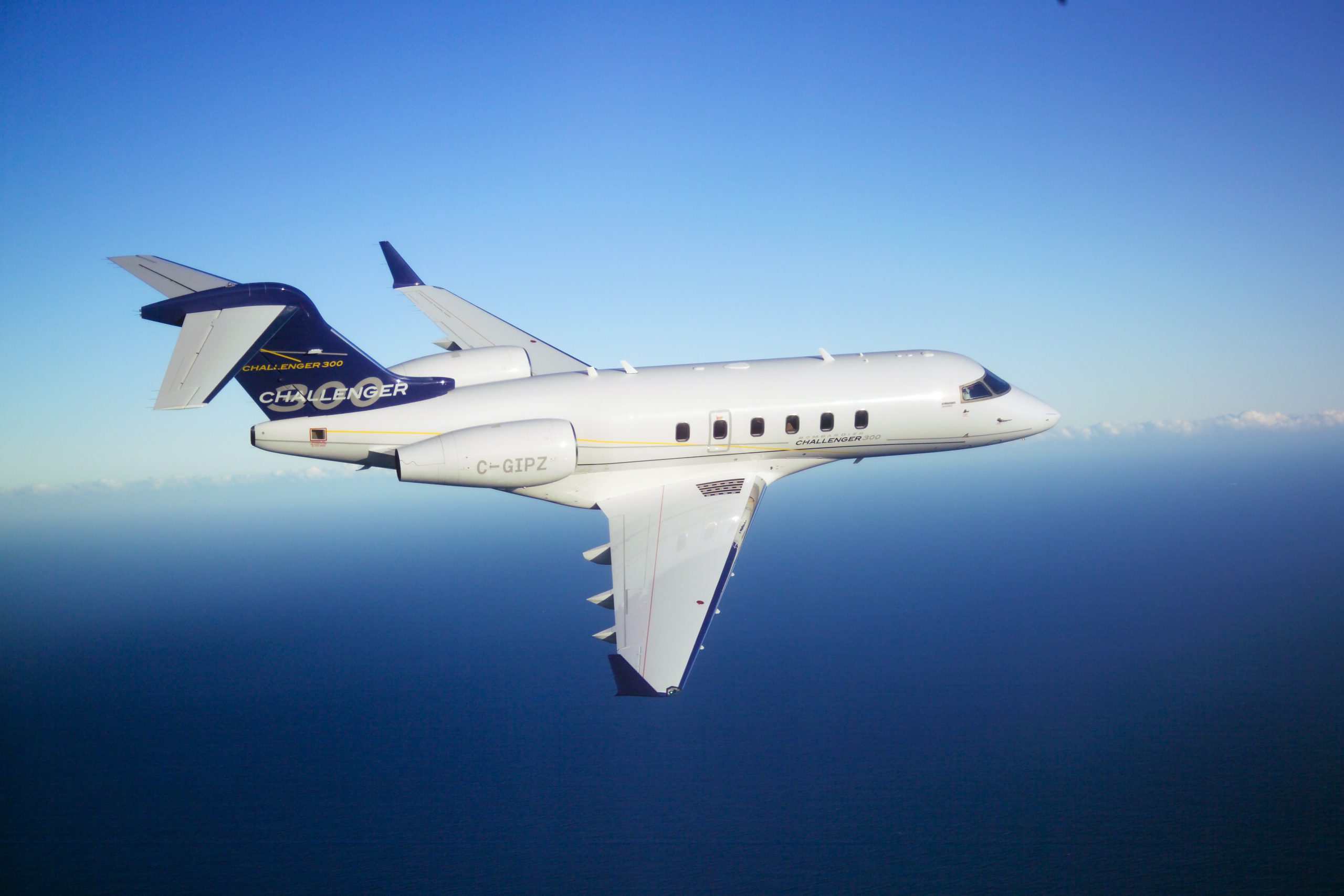
Midsize jets are where private aviation gets genuinely comfortable. The jump from a light jet to a midsize is often more noticeable than any other step up the size ladder, primarily because you gain something that transforms the in-flight experience: you can stand up fully in the cabin.
The midsize segment holds the largest revenue share in the global business jet market, according to multiple market research reports, because it delivers the best balance of range, operating cost, and passenger comfort for the majority of typical business travel missions.
Midsize jets are typically 55 to 65 feet long with cabin heights between 5.6 and 5.9 feet, which is walk-around territory for most passengers. You get a fully enclosed and separate lavatory, a proper galley with catering options, Wi-Fi connectivity on most aircraft, fold-out tables, and enough room to comfortably work or rest during a four to five hour flight.
The Hawker 800XP was one of the defining aircraft in this category, featuring a six-foot-wide cabin that was the largest in class at the time. Today, aircraft like the Cessna Citation XLS+ and the Bombardier Learjet 60 XR dominate the midsize market, offering strong runway performance alongside improved avionics and cabin management systems.
Midsize jets can still operate from many smaller airports and are considerably more fuel-efficient than super-midsize and heavy jets. If your typical trip is coast-to-coast domestic with seven or fewer passengers, a midsize jet hits every requirement without the premium operating cost of a larger aircraft.
Notable routes: New York to Denver, Chicago to Los Angeles, London to Moscow, Dallas to New York.
Super Midsize Jets: The Unsung Champions
The super midsize category is arguably the best-kept secret in private aviation. Often overlooked because it lacks the name recognition of "heavy jet," this segment delivers genuinely large-cabin performance with enough range to cover most transatlantic city pairs, at operating costs significantly below full heavy jets.
Super midsize jets sit in a powerful niche. Their cabin heights reach 5.9 to 6.2 feet, they offer conference room configurations, full-service galleys, and improved baggage capacity compared to standard midsize jets. The Gulfstream G280, with its cabin dimensions of 6 feet 1 inch high and 6 feet 10 inches wide, is a prime example of what this segment offers.
The Bombardier Challenger 300 is perhaps the most recognized super midsize jet, praised for delivering one of the quietest cabins in its class alongside greater interior volume than any competing aircraft at the time of its launch. The Challenger 350, its successor, can carry up to 10 passengers up to 3,100 nautical miles, comfortably covering New York to London or Los Angeles to Tokyo with one fuel stop.
The Cessna Citation X deserves a special mention here. At introduction, it was certified as the fastest civilian jet in the world, with a top speed of Mach 0.935 and a range of around 3,400 nautical miles. It remains a favorite for executives who prioritize speed above all else. Technically classified as either super midsize or large depending on the source, it blurs category lines in a good way.
Notable routes: New York to London (with stop), LA to Tokyo (with stop), Miami to Paris, Chicago to Rome.
Heavy Jets and Ultra-Long-Range Jets: The Pinnacle
If midsize jets are the business class of private aviation, heavy jets are the first-class suites. Scratch that — they are the penthouse suite on an ocean liner. These aircraft are purpose-built to fly long-haul international routes nonstop while their passengers sleep in proper beds, hold meetings in dedicated conference rooms, and enjoy full-service dining from a staffed galley.
The FAA defines heavy wake turbulence aircraft as those with a maximum takeoff weight exceeding 300,000 pounds, but in the private aviation context, the term "heavy jet" refers to large-cabin business jets that typically weigh between 60,000 and 110,000 pounds MTOW. The Gulfstream G700, for example, has a maximum takeoff weight of 107,600 pounds.
Heavy jets redefine what an aircraft cabin can be. The Gulfstream G700 cabin runs 56 feet 10 inches long, 8 feet 2 inches wide, and 6 feet 5 inches tall. It features five distinct living areas, 20 panoramic oval windows, and can accommodate up to 19 passengers across sleeping suites, a dedicated dining area, a lounge, a conference zone, and a private stateroom. List price: $78 million.
The Gulfstream G650, which set more than 65 city-pair speed records before being superseded by the G700, featured a cabin 8.5 feet wide — wider than many commercial first-class cabins — and a range of 7,000 nautical miles at Mach 0.85. In a record-setting flight, a G650ER completed a nonstop business jet journey of 8,379 nautical miles, flying from Singapore to Tucson, Arizona.
The Gulfstream G550, which remained in production until 2021, was configured with up to four distinct living areas and featured cabin pressure equivalent to an altitude of 4,350 feet at its 45,000-foot cruise ceiling, dramatically reducing passenger fatigue compared to commercial aircraft at similar altitudes.
Bombardier's Global series rivals Gulfstream in this space. The Global 7500 set its own nonstop distance record of 8,225 nautical miles. Its successor, the Global 8000, entered service with an 8,000-mile envelope that allows New York to Dubai or London to Singapore without stopping to refuel.
Notable routes: New York to London nonstop, Los Angeles to Tokyo nonstop, Dubai to New York nonstop, London to Singapore (one stop).
Full Comparison: All Private Jet Categories at a Glance
| Category | Passengers | Range | Cabin Height | Best For |
|---|---|---|---|---|
| Very Light Jet | 4–6 | 1,000–1,400 nm | 4.5 ft | Short domestic hops, 2–3 passengers |
| Light Jet | 6–8 | 1,500–2,000 nm | 4.7–5 ft | Regional business travel, 4–6 passengers |
| Midsize Jet | 7–9 | 2,500–3,000 nm | 5.6–5.9 ft | Domestic and near-international, up to 7 pax |
| Super Midsize | 8–10 | 3,200–4,000 nm | 5.9–6.2 ft | Long domestic and short transatlantic |
| Heavy Jet | 10–16 | 4,500–6,000 nm | 6.1–6.4 ft | Intercontinental, large groups, long-haul luxury |
| Ultra-Long Range | 12–19 | 7,000–8,000 nm | 6.3–6.5 ft | Nonstop global, executive travel, VIP flagship |
FAA Regulations and Safety Standards for Private Jets

Every private jet operating for charter in the United States must meet strict FAA standards. The relevant regulatory framework is 14 CFR Part 135, which governs on-demand air carrier operations. The FAA grants charter authority to operators through Part 135 certificates and requires higher pilot training standards, maintenance procedures, and airworthiness compliance than general aviation (Part 91) operations.
For aircraft with 10 or more passenger seats, Part 135 operators must maintain a Continuous Airworthiness Maintenance Program (CAMP) and have both engines and critical systems backed by redundant systems meeting Part 25 transport-category airworthiness standards. Transport-category certification requires that the aircraft demonstrate safe single-engine performance, meaning it can continue takeoff or safely abort even if one engine fails at the most critical moment.
How to verify a charter operator's credentials
Before booking any private charter flight, you can verify the operator holds a valid Part 135 certificate through the FAA's publicly maintained list of certificated air carriers. Third-party safety ratings from ARGUS, Wyvern, and IS-BAO provide additional independent verification of operator maintenance and training standards.
Aircraft certification categories under the FAA are distinct from the industry's commercial size categories. The FAA's weight classification system for air traffic management purposes defines "Heavy" as any aircraft over 255,000 pounds — a category that covers commercial widebody jets, not private business jets. In the business aviation world, "heavy" is a market term rather than a regulatory one.
Market Statistics Worth Knowing
The global business jet market is valued at approximately $95.6 billion. Multiple independent research firms project it to grow to between $156 billion and $174 billion, driven by rising numbers of ultra-high-net-worth individuals globally, expanding charter infrastructure in Asia-Pacific, and a post-pandemic shift in travel preferences toward private aviation.
North America remains the dominant market, accounting for roughly 37% to 45% of global new jet deliveries. Meanwhile, fractional ownership departures have climbed to record highs, with growth of 56% above historical levels to 578,835 total flights — a signal that more travelers are accessing private aviation through shared ownership models rather than outright aircraft purchase.
The pre-owned jet segment holds the largest share of market transactions by volume. First-time buyers and charter operators frequently opt for pre-owned aircraft because of their slower depreciation rate relative to new jets, the availability of a wide range of certified models, and the ability to acquire capable aircraft at a fraction of the new-purchase cost. A 10-year-old Gulfstream G550, for example, is available on the open market for approximately $15 to $20 million, versus a new Gulfstream G700 at $78 million.
Fuel prices are a major factor in operating economics. Jet-A fuel averages around $6.07 per gallon. A heavy jet like the Gulfstream G650 burns approximately 377 gallons per hour, which translates to roughly $2,280 per hour in fuel alone — before crew, maintenance, handling, and landing fees. A light jet burning 80 to 100 gallons per hour puts those numbers in a much more accessible range.
Quick Decision Guide: Which Jet Size Is Right for You?
Frequently Asked Questions
What Is Changing in Private Aviation
The private jet industry is not sitting still. Several trends worth knowing about are reshaping what aircraft will look like by the end of this decade.
Sustainable aviation fuel (SAF) adoption is accelerating. Gulfstream and Rolls-Royce have completed OEM test flights using sustainable aviation fuel, and Pilatus has entered a partnership with Swiss solar fuel company Synhelion to advance solar-derived fuel use in business aviation. These developments respond to CORSIA (the Carbon Offsetting and Reduction Scheme for International Aviation), which creates compliance targets for aviation emissions.
Electric and hydrogen-electric propulsion concepts are entering the development pipeline specifically targeting the short-range VLJ and light jet segments. Sirius Aviation and BMW unveiled a hydrogen-electric business jet concept claiming an 1,150-mile range. While these aircraft are not yet commercially certified, they signal the direction of next-decade light jet design.
Engine technology is advancing rapidly in the heavy segment. Rolls-Royce's Pearl series engines and Pratt and Whitney's PW800 family promise approximately 15% better specific fuel consumption versus older powerplants, reducing operating costs and carbon output for long-range jets.
AI-driven predictive maintenance is another significant shift. Airlines have used condition-monitoring systems for years, but business jet operators are increasingly adopting these tools to reduce unplanned downtime, optimize maintenance intervals, and improve dispatch reliability — particularly valuable for private operators who cannot afford a missed departure.
From everything I've researched and put together here, my recommendation is this: match the aircraft to the mission, not your ego. The most expensive jet is not always the right jet. A light jet that takes you nonstop to the right airport in three hours will serve you better than a heavy jet that drops you at a major hub 90 minutes from your real destination. Start with your passenger count, your longest expected nonstop leg, and your typical baggage needs, and let those three factors narrow the category. Everything else — the flat beds, the Michelin-starred galley, the 19 windows — is a bonus you add once the fundamentals are right.