
It is one of the most genuinely interesting questions in premium travel, and the answer is almost never the same twice. Private jet charter and first class are both premium products, but they solve different problems, suit different travellers, and deliver completely different experiences. This article gives you an honest, side-by-side comparison across every dimension that actually matters: cost, time, privacy, flexibility, comfort, airport experience, and which option makes sense in which situation. There is a clear answer waiting at the end, but it depends on who you are and what you are actually trying to accomplish.

Before running the comparison, it helps to be precise about what each product actually is.
First class is the top cabin tier offered by commercial airlines. In Australia, that primarily means Qantas First on the Airbus A380, which flies between Sydney, Melbourne, Singapore, London, and Los Angeles. Internationally, it means carriers like Singapore Airlines, Emirates, Qatar Airways, and Cathay Pacific, each of which operates first class suites with varying degrees of privacy and comfort. You are buying a seat, or a suite, on a scheduled flight that departs at a fixed time with hundreds of other passengers on board, even if you cannot see most of them from your enclosed suite.
Private jet charter means hiring the entire aircraft exclusively. You are not purchasing a seat. You purchase the aircraft, the crew, the departure time, and the routing. The schedule is built around you. The cabin is occupied only by the people you choose to bring. There are no other passengers. The airline does not exist in the traditional sense. Your operator is a CASA-certified air transport operator with an Air Operator Certificate, flying on a route and schedule you control.
This distinction matters because the comparison is often framed as a luxury competition, as if both products are simply trying to be comfortable. They are not. First class is a premium version of mass transportation. Private charter is a completely different category of service. Understanding that helps you make a rational decision rather than an emotional one.
Cost is where most people start, and it is where the comparison is most frequently misrepresented. The raw headline numbers suggest first class always wins on price. That is true for solo travellers on long-haul international routes. It becomes far less true as group size grows and as route length shortens.
Qantas First Class on the A380 runs between roughly AUD 9,000 and AUD 30,000 per person return depending on the route and booking timing, with Sydney to London fares typically in the AUD 15,000 to AUD 25,000 range per person. Singapore Airlines First Class from Australia runs around AUD 8,000 to AUD 12,000 per person one way to Singapore. These are per-seat prices that you pay regardless of group size.
For domestic Australian routes, first class does not exist in the traditional sense. Qantas and Virgin Australia offer business class on domestic routes, with fares typically ranging from AUD 400 to AUD 1,200 per person depending on the route and timing. Fully enclosed first class suites simply do not exist on Australian domestic flights.
Private jet charter in Australia is priced per aircraft, not per seat. Current market pricing for Australian routes breaks down roughly as follows:
For the Sydney to Melbourne route (approximately one hour of flight time), a light jet costs around AUD 6,000 to AUD 10,000 per aircraft one way. Divide that across four passengers and the per-person cost is AUD 1,500 to AUD 2,500, which compares favourably against Qantas business class domestic fares. For six passengers, it becomes even more compelling.
The economics of private charter shift dramatically with group size. Consider four executives flying Sydney to Brisbane. Four Qantas business class fares at AUD 700 each equals AUD 2,800. A light jet charter on the same route might cost AUD 8,000 to AUD 9,000 total, or AUD 2,000 to AUD 2,250 per person. At that group size, the private jet is already cheaper per seat than business class, with a dramatically better experience.
For international routes, the calculation changes. Four people flying Qantas First from Sydney to London at AUD 20,000 per person return totals AUD 80,000. A private jet on the same route would cost AUD 250,000 or more return, making first class significantly more economical on a per-seat basis. The larger the group and the shorter the route, the better private charter looks. The smaller the group and the longer the intercontinental haul, the better first class looks.
First class ticket prices are not the full picture. Add airport transfers from and to major commercial terminals (often 30 to 60 minutes from city centres in Australian capitals), potential hotel nights if connections are required, time lost to 90-minute early check-in requirements, and the productivity lost during security queues and boarding. None of these appear in the ticket price but all of them have real cost, particularly for executives whose time has a clear dollar value attached to it.
Private charter pricing, by contrast, covers door-to-door time in a way that first class pricing does not. You drive to the FBO, which is typically closer to the city centre than major commercial terminals, arrive 15 minutes before departure, and board immediately. That efficiency has a dollar value that rarely appears in the cost comparison but is consistently cited by corporate travel managers as a primary justification for charter spend.

If cost is the first question, time is usually the decisive one for business travellers. And this is where the comparison becomes genuinely one-sided.
Flying first class on a commercial airline still requires arriving at the airport 90 minutes to two hours before departure. It requires clearing security, even via dedicated lanes. It requires waiting at the gate even with priority boarding. It means departing at a time the airline chose, not a time you chose. It means arriving at a major hub airport, which may be 30 to 60 minutes from your actual destination by ground transport. And it means connecting via hub cities if your destination is not directly served.
On a Sydney to Melbourne flight that takes one hour in the air, the total door-to-door commercial travel time for a CBD-to-CBD journey often runs three to four hours when you add terminal time, security, boarding, and ground transport at each end. That is before accounting for any delay, which runs at measurable frequency on busy Australian domestic corridors.
Private charter passengers save approximately four to six hours on a standard domestic journey when the full door-to-door time is counted, not just the flight time. You arrive at the FBO 15 minutes before departure. Security is personalised and takes minutes. Boarding is immediate. Your aircraft departs when you are ready. You can use more than 300 airports across Australia that commercial airlines do not service, meaning you can often land significantly closer to your actual destination. Your ground transport can meet you at the aircraft steps.
That four to six hours saved per domestic trip represents almost a full working day. For an executive billing at AUD 1,000 per hour or running a business where their time directly generates revenue, the maths of private charter as a productivity tool is not difficult.
Consider a Sydney-based executive who needs to attend meetings in Brisbane, Perth, and Adelaide in a single two-day window. On commercial first class, this requires building around airline schedules, accepting connection risks, and likely adding hotel nights. On private charter, the aircraft is available when needed, the route is customised to the meeting schedule, and all three cities can be covered without an overnight stop. This is a scenario that commercial aviation simply cannot match at any cabin class.

Privacy is the dimension where private charter and first class are most categorically different, and it matters more than most people acknowledge before they need it.
Modern first class products have made genuine advances in privacy. Singapore Airlines and Emirates now offer fully enclosed suites with sliding doors. Qantas First on the A380 has 14 seats in a 1-1-1 configuration with reasonable seat privacy but no enclosed door. The forthcoming Qantas A350 Project Sunrise suites will be substantially better, with completely enclosed cabins.
But the structural reality of first class privacy is unchanged regardless of suite design. You are on an aircraft with 200 or more people. Your crew serve multiple passengers. Other passengers in the first class cabin can see you and, in many configurations, hear you. You share lavatories with other cabin passengers. If you are conducting a sensitive business conversation, reviewing confidential documents, or discussing commercially sensitive information, you are doing so in a space that, however refined, is occupied by strangers. The suite door closes, but the aircraft remains a shared environment.
On a private jet charter, the only people on the aircraft are the people you chose to bring. Full stop. There are no adjacent passengers. There are no shared lavatories with other travellers. There is no risk of being photographed, overheard, or recognised. You can conduct board-level discussions, review acquisition documents, discuss personnel matters, or simply travel without public exposure in a way that is simply not possible on any commercial aircraft regardless of cabin class.
For high-profile executives, public figures, celebrities, athletes, and anyone negotiating commercially sensitive transactions, this is not a luxury preference. It is a practical requirement. The confidentiality of a private charter flight is a feature of the product that has no commercial aviation equivalent at any price point.
The airport experience is one of the most underrated dimensions of the comparison, because it is one of the areas where the difference is felt most viscerally.

First class passengers access dedicated check-in counters, priority security lanes, and exclusive airport lounges. Qantas First Lounges in Sydney and Melbourne are genuinely excellent spaces: spa treatments with LaGaia, restaurant-style dining designed by Neil Perry, premium Champagne service, private business suites with Wi-Fi. Singapore Airlines and Emirates offer comparable or superior lounge experiences at their hubs. These lounges represent the best commercial airport hospitality available.
But even the best first class lounge experience requires navigating a commercial airport terminal. You still queue at security, however short that queue is. You still walk through a terminal shared with thousands of other travellers. You still board from a gate. The lounge is excellent, but it exists within the context of a mass transit environment.

Private charter passengers use Fixed-Base Operators (FBOs), dedicated private aviation terminals that operate separately from commercial terminals. In Australia, this means facilities like ExecuJet and Jet Aviation at Sydney, the Melbourne Jet Base at Tullamarine, Essendon Fields, private terminals at Brisbane, Perth, Adelaide, and Cairns.
At an FBO, you drive to the facility and often directly airside. Your luggage goes from your car to the aircraft. Security is personalised and takes three to five minutes. The waiting area is a private lounge, not a shared terminal. When the aircraft is ready, you walk to it. There is no gate, no boarding announcement, no queue. Total airport time before boarding: typically 15 to 20 minutes from car arrival.
The FBO experience is not as elaborate as a Qantas First Lounge in terms of amenities. But it removes the airport experience almost entirely, which is arguably a superior outcome. The best lounge in the world is still a lounge you spend time in. The best FBO gets you to the aircraft so quickly you barely use the lounge at all.
This is the section where the comparison is most genuinely balanced, because the in-flight experience on a modern commercial first class product is exceptional in ways that private charter does not always replicate.
The leading first class products in 2025 are genuinely remarkable. Singapore Airlines Suites on the A380 offer fully enclosed cabins, a double bed configuration for couples, and a dining experience that rivals fine restaurants. Emirates First offers a shower spa at 40,000 feet. Qatar Airways Qsuite combines business class seating with enclosed suites and double-bed configurations. These products have been developed over years with enormous investment and represent genuine innovations in premium commercial travel.
Qantas First on the A380 sits at a solid but not exceptional position in this group. The 14-seat 1-1-1 cabin offers privacy and lie-flat seating with a menu designed around Australian produce and an award-winning wine and Champagne list. The forthcoming A350 first class suites, which will be roughly 50 percent larger than the current A380 product, will compete more directly with the best international offerings.
On long-haul flights of ten hours or more, a world-class commercial first class product offers one thing that domestic private charter typically does not: a lie-flat bed in a pressurised cabin with carefully curated cuisine, Champagne, and entertainment. For a 17-hour Sydney to London flight, the Qantas First cabin with a proper meal service and a full night of sleep is a compelling product.
Private charter cabin comfort depends entirely on which aircraft you book. A very light jet on a 45-minute Sydney to Canberra hop offers leather seating, USB power, and a small refreshment selection. A midsize jet on a two-hour Melbourne to Adelaide leg adds stand-up headroom, a proper lavatory, and a dedicated refreshment area. A long-range Gulfstream G650ER on a Sydney to Singapore route offers a fully appointed cabin with dining, lie-flat seating, and satellite connectivity.
The key distinction is customisation. On a private charter, the catering is built specifically around your preferences. The cabin layout serves your group. The entertainment, the temperature, the lighting, the timing of meal service all respond to what you want rather than what an airline product manager decided suited the greatest number of passengers. If you want a specific wine, a particular menu, or a cabin configured as a meeting room for the first hour and a rest environment for the second, that is what you get.
Where private charter clearly outperforms first class is on shorter domestic routes. For a one-hour Sydney to Melbourne flight, the commercial first class product does not exist (only business class). A private jet charter on that route delivers the full private aviation experience with catering, crew, and a cabin focused entirely on you. The comparison at that route length is between business class and private charter, and private charter wins comprehensively.
This is the dimension where private charter is most definitively superior to any commercial product at any cabin class, and it is worth stating plainly.
First class, for all its quality, flies on the airline schedule. The 7am Qantas First departure from Sydney to Singapore leaves at 7am because that is when Qantas scheduled it. If your meeting runs long and you need to leave at 9am instead, you miss your flight. If the route you need is not served by a carrier with a first class product, first class is not available to you. If you need to make three stops in one day, first class cannot accommodate that itinerary.
Private charter flies on your schedule. The aircraft departs when you are ready. If your schedule changes, the departure time changes. Routes are built around where you need to go, not around which city pairs are commercially profitable for an airline. If you need to land at a regional airstrip 50 kilometres from your actual destination, a turboprop or light jet can do that. The Best Private Jet Charter Australia directory gives you access to operators covering every part of the country, from major hubs to remote regional access.
For travellers with fixed, predictable schedules flying well-served routes, this flexibility advantage matters less. For anyone whose schedule is determined by other people, events, or the unpredictable nature of business, the flexibility of private charter is not a luxury. It is the product.
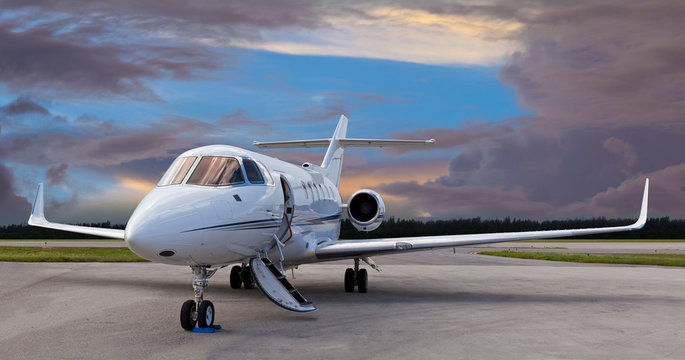
Commercial airlines, including their first class cabins, operate through the airports commercial aviation has decided are worth serving. In Australia, that means the major city airports and a limited set of regional hubs with sufficient passenger volume. The 300-plus other airports and airstrips across the country are unreachable by commercial aviation.
Private charter operates from all of them. A King Air or Pilatus PC-12 can land on a grass strip at an outback cattle station. A light jet can use Longreach, Kalgoorlie, or Uluru. A midsize jet can reach Hamilton Island, Coolangatta, or Avalon directly rather than connecting through a hub.
This matters practically for several Australian travel scenarios:
Enough with the framework. Here is a direct, scenario-by-scenario verdict based on everything above.
First class wins. Qantas First on the A380 at around AUD 15,000 to AUD 20,000 one way is expensive, but a private ultra-long-range jet on the same route would cost AUD 120,000 to AUD 200,000 or more. Unless privacy is a non-negotiable requirement, first class is the rational choice. Singapore Airlines or Qatar Airways are arguably better first class products on this route.
Private charter wins. Four business class fares at AUD 600 each equals AUD 2,400 total. A light jet charter return same-day costs around AUD 12,000 to AUD 16,000 total, or AUD 3,000 to AUD 4,000 per person. The premium is modest and the advantages, including departure time control, no airport terminal time, private working environment, and same-day return on your schedule rather than the airline schedule, are significant. For Brisbane or Melbourne departures especially, the FBO access advantage is measurable.
Closer call. Eight Singapore Airlines First fares at AUD 10,000 each equals AUD 80,000. A private charter on the same route (Sydney to Singapore is approximately AUD 239,000 per aircraft based on current market pricing for larger jets) comes in at around AUD 30,000 per person. First class wins on cost. Private charter wins on every other dimension. The decision comes down to budget and how much the group values privacy and schedule control on an eight-hour international flight.
Private charter is compelling. A family of four with children on a commercial flight faces check-in, security, boarding with kids, managing luggage in overhead compartments, and arrival queue. A light jet charter to the Gold Coast for a family of four might cost AUD 8,000 to AUD 10,000 total, or AUD 2,000 to AUD 2,500 per person. Business class commercial for four people with baggage and convenience fees approaches a similar number. The private option delivers a fundamentally different travel day, particularly with young children.
Private charter only. There is no first class product that lands at a remote Western Australian airstrip. This is not a competition. For the significant proportion of Australian business travel that involves regional and remote destinations, private charter is not a premium alternative to first class. It is the only option. Perth serves as the hub for much of this travel.
Private charter wins regardless of cost. If your public profile means that travelling in a shared commercial cabin creates security exposure, media risk, or reputational risk, private charter is not a luxury decision. It is a professional necessity. The same applies to confidential business transactions, sensitive negotiations, and any situation where the content of your conversations cannot be at risk of disclosure.
Private charter wins clearly. A same-day Melbourne to Adelaide return by commercial means requires working around Qantas and Virgin Australia schedules, spending meaningful time in commercial terminals, and being vulnerable to delay. A light jet charter does the same trip with departure and return on your schedule, from Essendon Fields rather than Tullamarine (saving significant time), at a per-person cost that competes with business class once two or three people are travelling together.
An honest comparison acknowledges where first class has legitimate advantages, not just where private charter wins. Here are the areas where commercial first class is genuinely the superior product.
Not accurate. Australia operates one of the world's most rigorous aviation safety frameworks. Commercial airlines operating under CASA oversight have exceptional safety records, and private charter operators operating under Part 119 of the CASR are subject to the same regulatory authority. Safety on a private charter depends on the operator's AOC compliance, pilot hours, and maintenance standards, all of which you can verify through the CASA public register. Both products, operated correctly, are safe. The quality of the operator matters more than the category of product.
They are not. An enclosed suite on Singapore Airlines is more private than an open first class seat, but it is not private in the way a chartered aircraft is private. The structural difference between sharing a pressurised tube with 200 other people and being the only passenger group on an aircraft cannot be closed by a suite door.
This perception is outdated. A group of four sharing a light jet charter on a short Australian domestic route pays per-person costs that compete with or beat business class commercial. Empty leg flights at 30 to 70 percent discounts make private aviation accessible to travellers who would not ordinarily consider it. Jet card programs and fractional ownership models further reduce the per-trip cost for frequent flyers. Private aviation in Australia has become meaningfully more accessible over the last decade.
The quality gap between first class products is enormous. Qantas First is a solid but not leading product by international standards, as multiple independent reviewers have noted. Singapore Airlines Suites, Emirates First, and Qatar Qsuite Business (which functions as a de facto first class on many routes) represent significantly higher benchmarks. When comparing private jet charter against "first class," the comparison depends heavily on which carrier's first class you are actually considering.
The private jet vs first class comparison has a specifically Australian character that makes private charter more compelling here than in many other markets.
Australia is the world's sixth largest country by land area. The distance between Perth and Sydney is roughly the same as London to Cairo. The gap between commercial service and the destinations people actually need to reach is enormous. Qantas first class exists only on the A380, which serves five international routes. It does not exist domestically. The choice between private charter and first class on most Australian routes is actually a choice between private charter and business class, which changes the cost comparison significantly in private charter's favour.
The Australian resources, mining, and agricultural sectors represent a massive pool of private charter demand that has no first class equivalent. FIFO operations, remote station access, and regional business travel collectively drive a significant proportion of Australian charter volume that exists entirely outside the commercial first class conversation.
And the geography rewards airport flexibility in ways that do not apply in markets with denser commercial coverage. Being able to land at one of 300-plus airports rather than being confined to the dozen or so served by commercial first class products is a practical advantage that matters more in Australia than it would in Europe.
Perth to Sydney is roughly the same as London to Cairo. Qantas first class exists only on the A380, serving five international routes. It does not exist domestically.
The choice on most Australian routes is between private charter and business class — which changes the cost comparison significantly in private charter's favour.
FIFO operations and remote station access drive a massive proportion of Australian charter volume that exists entirely outside the commercial first class conversation.
Use this to cut through the comparison and get to a clear answer for your specific situation.
For domestic Australian travel, first class does not exist. The comparison is between private charter and business class, and once group size reaches three or four people, private charter is often competitive on cost and superior on every other dimension. The time savings alone, consistently documented at four to six hours per domestic round trip when door-to-door travel is counted, represent real economic value for anyone whose time is worth anything at all.
For international travel, be honest about group size and route. A solo traveller on a Sydney to London route flying Singapore Airlines First at AUD 10,000 is getting a genuinely excellent product at a price no private charter can match. A group of four or more on a medium-haul international route like Sydney to Singapore should run the numbers carefully, because the gap narrows faster than most people expect.
The travellers I would most confidently recommend private charter to without hesitation are: any group of three or more on Australian domestic routes, any executive with a multi-city Australian itinerary, anyone whose travel involves destinations not served by commercial aviation, and anyone for whom the confidentiality of their journey is a genuine professional requirement.
The Best Private Jet Charter Australia directory covers operators from Hobart and Canberra to Townsville and everywhere between. Start with a quote on your most frequent route, run the group-size calculation honestly, and you might find the case for private charter is stronger than you expected.
Explore Charter Options by Destination