Private Jet Townsville Mining & FIFO
Private Jet Hire Townsville Mining | FIFO Charter Flights NQ 2026 home / routes / private jet hire townsville mining TSV · YBTL · North Queensland Private Jet HireTownsvilleMining &…

If you have ever wondered what it actually costs to fly private in Australia, you are not alone. Private jet cost per hour in Australia is one of the most searched questions in the aviation space, and the honest answer is: it depends on more variables than most people expect. This guide breaks every one of them down, using real 2025 market data from licensed Australian operators, government sources, and industry research, so you leave with a clear picture of what you will pay and why.
From turboprops suited to a quick hop between Brisbane and the Gold Coast, to ultra-long-range jets connecting Sydney with Singapore in a single leg, hourly rates in Australia currently span from approximately AUD $1,800 to over AUD $21,000. Read on to understand exactly where your situation sits on that spectrum.
The table below compiles 2025 hourly rate data from multiple Australian charter operators including FlightCharter.com.au, Air Charter Network, Rotor One, and GoJets Australia.
Aircraft Class | Typical Models | Seats | Hourly Rate (AUD) | Best For |
Turboprop | King Air 200, PC-12 | 6–11 | $1,800 – $3,500 | Short hops, remote strips |
Very Light Jet | Citation Mustang, Phenom 100 | 4–6 | $3,000 – $4,500 | City pairs under 2 hrs |
Light Jet | Citation CJ3, Phenom 300 | 6–9 | $3,822 – $6,880 | Domestic routes 1–3 hrs |
Midsize Jet | Hawker 800XP, Citation XLS | 7–9 | $6,116 – $12,232 | East–west routes, interstate |
Super Midsize | Praetor 500, Citation Long. | 8–10 | $7,500 – $10,000 | Long domestic + NZ/Bali |
Heavy Jet | Challenger 604, Falcon 7X | 10–14 | $10,000 – $18,000 | Transcontinental, Asia-Pacific |
Ultra Long Range | G650, Global 7500 | 10–19 | $15,000 – $21,406 | International + ultra-luxury |
VIP Airliner | ACJ318, BBJ | 15–50+ | $20,000+ | Groups, govt, sports teams |
A key point that catches many first-time private flyers off guard: the hourly rate you are quoted is almost never the all-in price. Understanding what is inside the rate, and what sits outside it, is essential for accurate budgeting.
Most operators enforce a minimum billing period of 1.5 to 2 flight hours per trip, regardless of actual airborne time. This means a Sydney to Melbourne flight of roughly 75 minutes will typically be billed as 1.5 hours minimum. Always confirm the minimum billing policy with your operator before booking.
Every quote you receive reflects a combination of these eight variables. Understanding them puts you in a stronger position when comparing quotes from multiple operators.
This is the single largest cost lever. The difference between a turboprop and an ultra-long-range jet can be a factor of 10x or more per hour. Aircraft selection should be driven by the distance of your route, the number of passengers, and the luggage you carry. Paying for a heavy jet on a 1-hour Sydney to Melbourne run is rarely necessary or cost-effective.
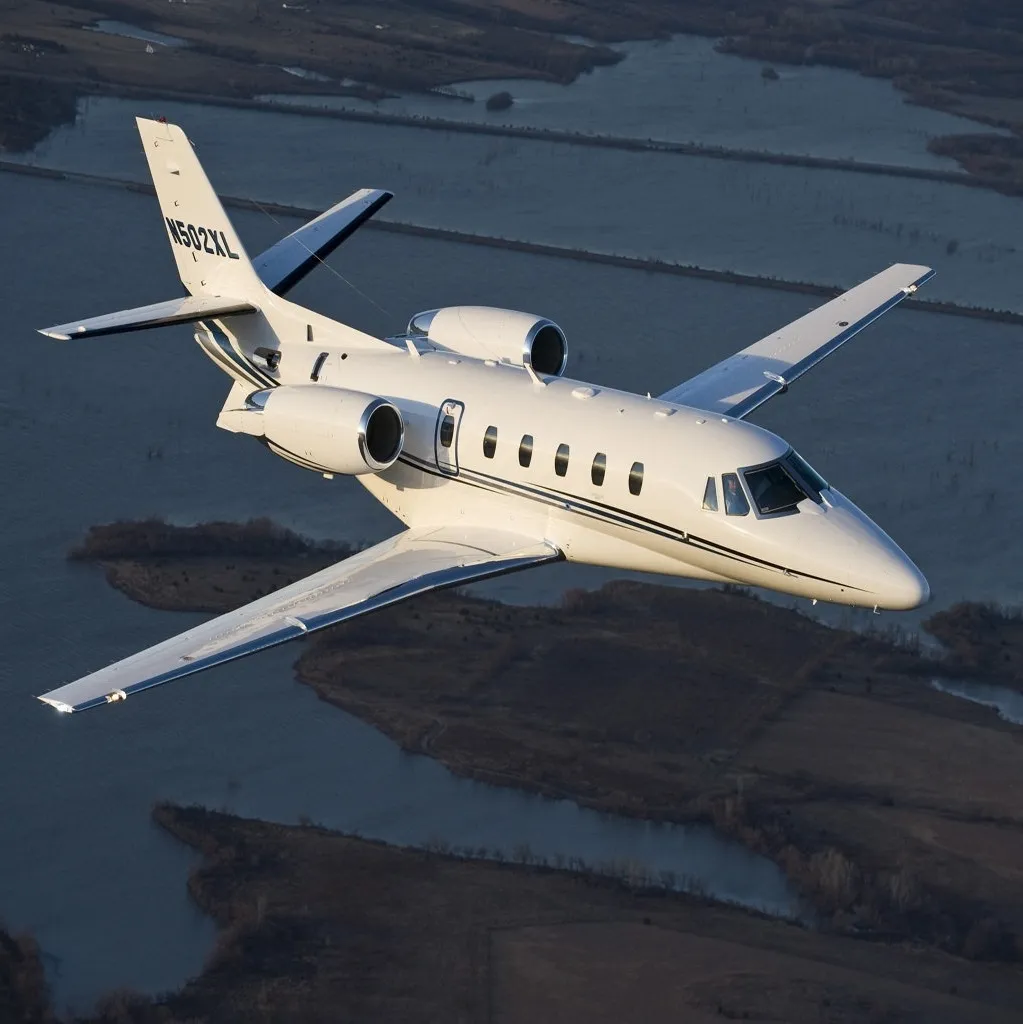
Aircraft vintage is a documented driver of operating cost. Research confirms that an aircraft’s age plays a key role in fuel consumption, as older aircraft tend to consume more fuel than those incorporating newer technology, and as operators replace aging fleets the overall fuel burn decreases over time (Kozuba & Ojciec, 2019). The efficiency gap is substantial: aircraft entering today’s fleets are approximately 80% more fuel efficient than those from the 1960s, a gain further accelerated in the mid-1970s with the development of flight management systems that automatically optimise cruise speed and engine power settings based on operational costs. For charter clients, this translates directly into pricing: a major reason operators favour newer aircraft is to reduce fuel costs, alongside improvements in passenger comfort and reductions in maintenance expenditure, meaning a newer aircraft’s higher base hourly rate is partially offset by lower fuel burn across the total flight distance.
Flight hours function as the primary multiplier against your hourly rate. A midsize jet billing at $9,000 per hour on a 1.25-hour sector yields $11,250 in base charter cost; the same aircraft on a 4-hour route costs $36,000. Research published in the Journal of Air Transport Management demonstrates that direct operating costs per revenue kilometre vary significantly with stage length, as aircraft operating at lower load factors over fewer miles incur a higher per-unit cost burden from fixed costs (Babikian et al., 2002). Distance also determines aircraft category viability: light jets lack the fuel range required for transcontinental domestic legs, making aircraft selection inseparable from route planning.
Major hub airports carry substantially higher operating costs than regional airfields. Panel data analysis published in ScienceDirect found that aeronautical fees are measurably more expensive at hub airports and those handling higher volumes of international traffic, with IATA reporting total user infrastructure charges reaching US$64.1 billion in 2008, representing 11% of airline expenses and the second largest external cost after fuel (Choo, 2014). In Australia specifically, following the privatisation of most major airports in 1997 and 1998, a five-year price control regime was removed in 2002, after which the Australian Competition and Consumer Commission was tasked with annual monitoring of price and quality performance under a light-handed regulatory framework (Forsyth, 2012). The ACCC’s own monitoring reports found that Sydney Airport recorded the highest aeronautical revenue per passenger among Australia’s major airports and noted it had the least favourable combination of aeronautical prices and quality-of-service rating. For routes originating near a major hub, a regional alternate airport may reduce your cost exposure, though operators may apply supplements accordingly.
Most operators apply a minimum billing floor per flight sector, typically 1.5 to 2 hours. If the aircraft must reposition to collect passengers, those ferry hours are generally billed at 50 to 100% of the standard rate. This structural feature of charter pricing is well understood in aviation economics: research published in ScienceDirect on airline seasonal behaviour confirms that aviation capacity, particularly fleet and crew components, has limited flexibility within any given scheduling cycle, meaning the fixed costs of repositioning and standby time must be recovered through minimum billing arrangements (Merkert & Webber, 2018). Same-day round trips can therefore deliver better value than two independently booked one-way sectors, as the repositioning burden is shared across the combined itinerary.
Charter pricing responds directly and predictably to demand cycles. Peer-reviewed research applying two-stage least squares estimation to a panel of over 18 million air fares found systematic peak-load pricing surrounding public holidays, with travel premiums ranging from 4.3% to 83.1% around national holidays (Abramowitz & Lovett, 2025). This effect is amplified by capacity constraints: research on airline seasonal behaviour found strong seasonal variation in average fares, driven by the reality that most aircraft capacity is invariant across seasons, forcing revenue-maximising operators to adjust price rather than supply during high-demand windows (Arikan et al., 2018). In Australia, school holidays, major sporting events, resources-sector conferences in Perth, and the Christmas to New Year period all create predictable demand spikes that compress availability and push average charter rates upward.
Charter jets operating under air operator certification require two pilots as standard. Under 14 CFR Part 135 Subpart F, the FAA mandates that each crew assignment provide at least 10 consecutive hours of rest during the 24-hour period preceding the planned completion of any flight segment, with a two-pilot crew capped at 10 flight hours within any 24-hour period. On extended or multi-day itineraries, duty time regulations require relief crews once those thresholds are approached, adding crew accommodation and per diem costs to the invoice. Australia’s Civil Aviation Safety Regulations impose comparable limitations under CASR Part 48. Per diem and overnight accommodation costs for crew are passed through to the client and represent a real, often underestimated, line item on longer charters.
Bespoke catering, premium beverages, ground transfers, specialist cargo handling, and branded corporate event configurations are all optional but can represent a meaningful share of total trip cost. Aviation pricing research confirms that differential pricing strategies allow operators to set different prices according to different customer groups and service configurations, meaning the gap between a stripped-back functional charter and a fully customised corporate experience can be substantial even on identical aircraft and routes. Clients who limit optional add-ons can reduce their effective per-hour equivalent considerably, particularly on shorter sectors where the add-on cost represents a larger proportion of the total invoice.
Here are indicative one-way costs for popular Australian routes in 2025, based on market rate data from multiple operators. These figures include base charter, standard airport fees, and GST, but exclude catering and overnight crew costs.
Route | Dist. (km) | Flight Time | Light Jet Est. (AUD) | Midsize Jet Est. (AUD) |
Sydney – Melbourne | 714 | ~1.25 hrs | $7,000 – $9,500 | $11,000 – $14,000 |
Sydney – Brisbane | 732 | ~1.5 hrs | $8,000 – $11,000 | $12,000 – $16,000 |
Melbourne – Brisbane | 1,375 | ~2.5 hrs | $14,000 – $18,000 | $18,000 – $26,000 |
Sydney – Adelaide | 1,165 | ~2.0 hrs | $11,000 – $15,000 | $16,000 – $22,000 |
Sydney – Perth | 3,290 | ~4.0 hrs | Not suitable* | $22,000 – $38,000 |
Melbourne – Perth | 2,728 | ~4.0 hrs | Not suitable* | $20,000 – $34,000 |
Brisbane – Cairns | 1,374 | ~2.5 hrs | $14,000 – $18,000 | $18,000 – $24,000 |
Perth – Bali (international) | ~1,800 | ~3.5 hrs | $60,000 – $80,000** | $80,000 – $130,000** |
This is where private aviation gets genuinely interesting for high-frequency flyers. If you are considering ownership rather than charter, the hourly rate calculation changes dramatically once you factor in fixed annual costs. Research on aircraft operating cost structure confirms that ownership costs including depreciation, insurance, and interest accrue on a fixed annual basis regardless of how many hours the aircraft actually flies. Research published in the Journal of Air Transport Management demonstrates that the more hours an owned aircraft flies per year, the more those fixed costs are spread across individual trips, steadily lowering the true all-in hourly rate. For Australian operators, annual fixed costs vary significantly by aircraft category, with larger cabin jets carrying substantially higher baseline ownership expenses than light jets irrespective of utilisation.
Cost Component | Light Jet | Midsize Jet | Heavy Jet |
Fuel burn (L/hr) | 200 – 300 L | 350 – 550 L | 700 – 1,000 L |
Fuel cost per hour (AUD @$1.50/L) | $300 – $450 | $525 – $825 | $1,050 – $1,500 |
Maintenance (per flight hr) | $800 – $1,200 | $1,200 – $2,000 | $2,000 – $2,500 |
Annual crew cost | $230K – $370K | $300K – $450K | $400K – $650K+ |
Insurance (annual) | $25,000 – $45,000 | $40,000 – $70,000 | $70,000 – $100,000+ |
Hangar / parking (annual) | $30,000 – $60,000 | $50,000 – $90,000 | $80,000 – $150,000 |
TOTAL annual ops cost (est.) | $800K – $1.1M | $1.1M – $1.8M | $1.8M – $3M+ |
At 200 flight hours per year, a light jet owner is paying an all-in equivalent of roughly AUD $4,500 to $6,000 per flight hour once you spread the fixed annual costs across actual flying. This compares favourably with on-demand charter rates for the same aircraft, which is exactly why the 200-hours-per-year threshold is often cited as the breakeven point where ownership starts to make financial sense. Adagold’s ownership analysis provides a detailed breakeven model for Australian conditions.
The hourly rate you pay for private aviation in Australia depends heavily on how you access the aircraft. There are four main models, each with distinct cost structures and sweet spots.
Access Model | On-Demand Charter | Jet Card | Fractional Ownership | Full Ownership |
Commitment | None | 12-month term | 3–5 years | Ongoing |
Upfront Cost | $0 | $11,950 – $764,495 | $350K – $8M+ share | $2M – $110M+ |
Hourly Rate (AUD) | $3,000 – $21,000+ | $4,795 – $7,395 | $2,670 – $10,000 | $500 – $3,000 (variable) |
Annual Ops Cost | Pay as you fly | Incl. in card rate | Mgmt fee + hourly | $800K – $3M+ |
Best For (hrs/yr) | Under 50 hrs | 50 – 100 hrs | 100 – 200 hrs | 200+ hrs |
Aircraft Flexibility | Full choice | 1–3 aircraft types | Fleet access | Fixed aircraft |
Repositioning Fees | Often included | Zero | None (fleet mgmt) | Full cost |
Jet Card hourly rates sourced from Airly.com (AUD $4,795/hr Citation Mustang to $7,395/hr Citation CJ2). Fractional hourly rates sourced from Air Charter Network (AUD $2,670 to $3,028/hr). Charter hourly rates from FlightCharter.com.au and Air Charter Network.
On-Demand Charter: Most Flexible, Highest Variability
Charter is the starting point for most private flyers in Australia. You pay per flight, no commitment required, and you have access to the right aircraft for each mission. Research published in ScienceDirect describes on-demand charter as a point-to-point service valued precisely for its flexibility, with pricing that varies based on aircraft location, demand, and scheduling conditions rather than a fixed rate structure. Best for those flying under 50 hours per year.
Jet Cards: Fixed Rates, Zero Repositioning Fees
Jet cards are pre-purchased block-hour programs that lock in a fixed hourly rate for a set term with no repositioning charges. Research on fractional aircraft ownership programs published in ScienceDirect identifies the jet card as a distinct product category whereby customers buy flight hours without becoming fractional owners, trading the variability of ad hoc charter for pricing certainty. Best for those flying 50 to 100 hours per year who want budget predictability.
Fractional Ownership: Lower Hourly Rate, Significant Upfront Cost
Fractional ownership means buying a share in an aircraft, typically between one-sixteenth and one-quarter, in exchange for guaranteed hours per year. Operations research published in ResearchGate confirms that fractional programs provide share sizes from one-sixteenth with 50 flying hours per year through to larger shares with up to 400 hours annually, with the management company handling all operational considerations and guaranteeing aircraft availability. Best for those flying 100 to 200 hours per year.
Full Ownership: Maximum Control, Maximum Commitment
Full ownership makes financial sense only above a high annual utilisation threshold. Research on aircraft operating cost structure confirms that ownership costs including depreciation, insurance, and interest accrue on a fixed annual basis regardless of flight hours, meaning the fixed cost burden only becomes economically rational when spread across consistent high-volume usage. Entry-level jets start at approximately AUD $2 million, with top-tier aircraft exceeding AUD $110 million. Best for organisations or individuals with consistently high annual flight demands.
Here it is, same word count, with hyperlinks swapped in:
All commercial charter operators in Australia are regulated by the Civil Aviation Safety Authority (CASA), the government body established under the Civil Aviation Act 1988. Every legitimate charter operator must hold a current Air Operator’s Certificate (AOC), which is issued only after a comprehensive safety assessment covering key personnel, aircraft airworthiness, and operational procedures.
Regulatory compliance is not cheap, and it flows directly into the hourly rates you pay. CASA administers more than 260 regulatory service fees across the industry. Annual certification renewals, mandatory inspections, and pilot training requirements under CASR Part 119 and related Parts add $15,000 to $50,000 per operator per year. These costs are genuine and necessary. They are also why you should be cautious of quotes that seem dramatically below market rate, as cutting corners on compliance has real safety consequences.
You can verify any operator’s AOC status directly on the CASA website. This is the single most important check you should perform before booking a private charter in Australia.
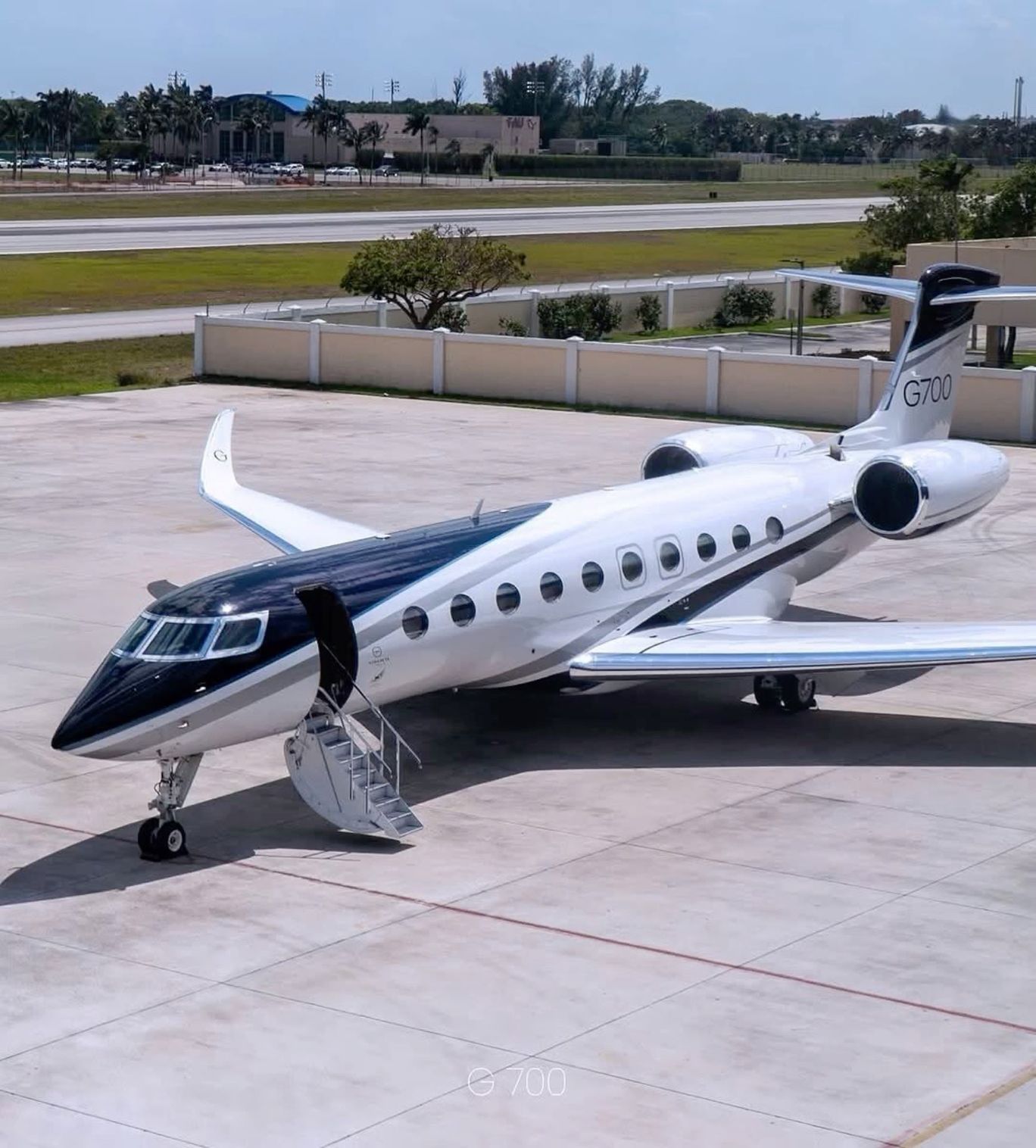
Private aviation in Australia is a growing market with genuine supply constraints, which keeps prices firm. The country is the second largest business aviation market in the Asia-Pacific region with approximately 230 business aircraft in active operation, representing a net fleet growth of around 10% over five years, according to Jetcraft’s 2024 market analysis.
Private jet travel in Australia increased by 28% between 2020 and 2023, according to BITRE’s Domestic Aviation Activity data cited by Signature Luxury Travel. By April 2024, charter flights were carrying 13% of all domestic air travellers in Australia, up from 8.6% pre-COVID.
At the same time, the industry faces real supply-side pressures: a shortage of trained pilots and maintenance technicians, limited hangar capacity at major airports, and the substantial infrastructure investment required for new aircraft. These factors combine to keep hourly rates in a range that reflects genuine operational costs rather than discretionary pricing.
Australia’s domestic airline industry was valued at approximately AUD $17 billion in revenue for the 2024-25 financial year, growing at a CAGR of 4.7%, according to IBISWorld. The private aviation segment rides alongside this broader market recovery, benefiting from strong corporate and resources sector demand.
When a charter jet completes a one-way trip, it often flies empty returning to base. These repositioning flights, known as empty legs, are offered at discounts of 25% to 75% off standard charter rates. On a $15,000 charter, a 50% empty leg discount saves $7,500. The trade-off is fixed departure times and potential cancellation if the originating client’s plans change. FlightCharter.com.au publishes available Australian empty legs, as does Airly and Skyler Aviation.
Monday and Friday are peak days on Australian corporate routes. Tuesday through Thursday bookings typically see better aircraft availability and can yield modest pricing advantages of 5 to 10%.
Bankstown Airport for Sydney and Essendon for Melbourne are genuine alternatives that can reduce airport fees significantly. Both are well serviced for private aviation and sit much closer to many corporate precinct destinations than the main international airports.
A same-day return booking avoids the cost of a second repositioning leg. If your schedule allows you to travel and return in a single day, round-trip charter pricing typically offers a 10 to 20% saving versus two separate one-way bookings.
For anyone flying four or more times a year on consistent routes, a jet card program locks in a fixed hourly rate, eliminates repositioning fees, and can save AUD $50,000 or more annually compared to ad-hoc charter, according to Airly’s pricing analysis.
A group of four flying Sydney to Melbourne does not need a midsize jet. A light jet or even a very light jet handles this route with full comfort at half the hourly rate. Matching aircraft category to route length and passenger count is the single most reliable way to reduce your per-trip cost.
The debate between private charter and commercial premium cabins is real, and the answer is genuinely route and group dependent.
On a Sydney to Melbourne route, a Qantas business class fare runs approximately AUD $500 to $1,200 per person return. A light jet charter on the same route costs roughly AUD $16,000 to $20,000 round-trip. At 4 passengers, the per-person cost is $4,000 to $5,000, or 3 to 8 times the business class fare. For 2 people, private is rarely the financially sensible choice on short domestic routes.
Where private aviation genuinely competes is on groups, remote destinations, and time-critical travel. For a group of 8 on a route not well-served by commercial airlines, or for a C-suite team needing confidentiality and a working environment during transit, the per-person economics shift considerably. The value of door-to-door time saving for a senior executive at AUD $500 per hour billing rate, saving 3 hours, equals AUD $1,500 in recovered productivity per trip.
After reviewing the full landscape of private aviation costs in Australia, my honest recommendation is this: start with charter if you are new to private flying, and move to a jet card once you know your typical routes and frequency. The fixed hourly rate and zero repositioning fees of a jet card make a genuine difference for anyone flying four or more times a year.
For corporate travel managers budgeting for private aviation, the 200-hour annual threshold is your guidepost. Below that, a well-managed mix of charter and jet card will almost always beat ownership on a cost-per-hour basis once you account for the full burden of fixed costs.
And whatever model you use, always verify the operator’s CASA AOC before booking. The regulatory framework in Australia is strong and the legitimate, compliant operators competing in this market deliver a genuinely high standard of safety and service. That compliance costs money, and it is money well spent.
Estimated pricing — actual quotes vary by operator & availability