
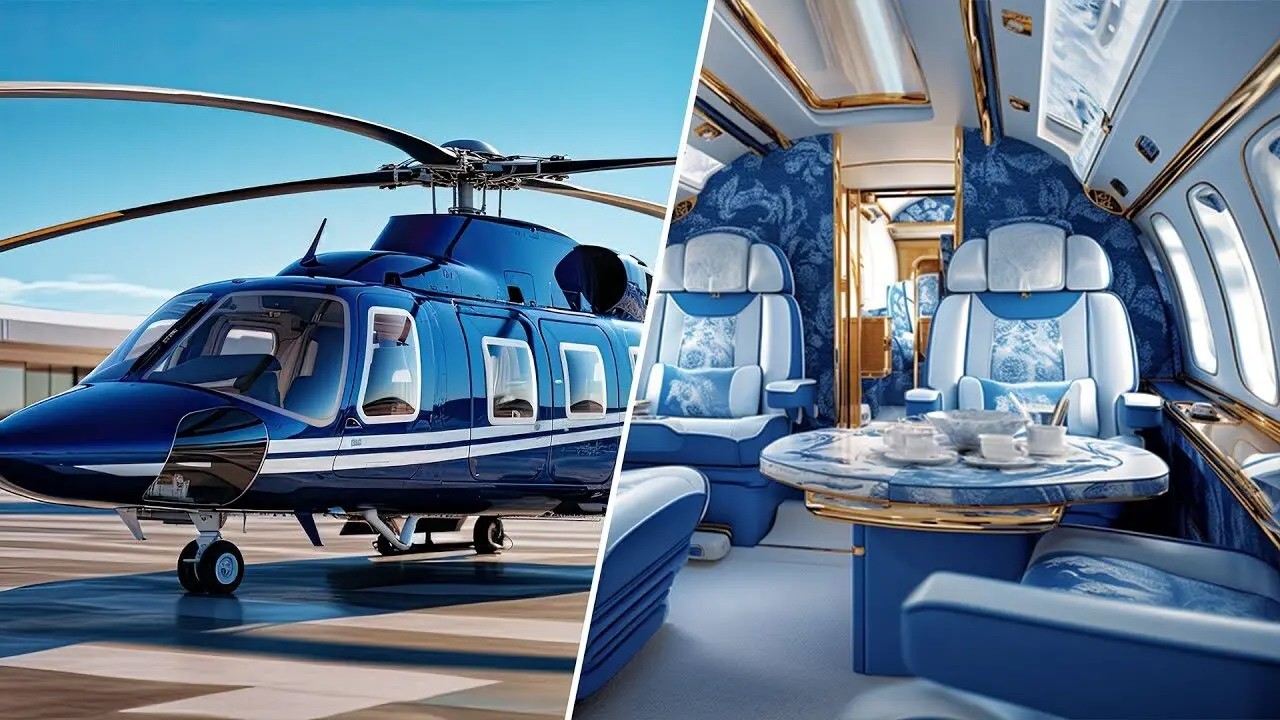
The two get lumped together as "private aviation" but they are built for opposite jobs. A jet is built to cover distance quickly in comfort, and it needs a runway at both ends. A helicopter is built to reach places that do not have one, at the cost of speed and range. Once you frame it that way, the choice for most trips becomes obvious well before you get a quote.
Speed Over Distance vs Access Without a Runway
A light jet cruises at roughly 750 to 820 kilometres an hour with a range well over 1,000 nautical miles. A light helicopter cruises at around 200 kilometres an hour with a range of about 500 kilometres, and even a twin-engine turbine helicopter tops out around 260 kilometres an hour. Over a short distance that speed gap barely matters, because the helicopter can often land within walking distance of where you actually need to be. Over a long distance it matters enormously, because the jet is covering the ground three to four times faster.
The other half of the equation is where each aircraft can land. A jet needs a paved runway long enough for its category, which is why our airport guides spend so much time on runway length and FBO access. A helicopter does not need a certified aerodrome at all. CASA's own guidelines for helicopters set out how a pilot and operator assess whether a paddock, a lawn, or a private pad is safe to use, rather than requiring every landing site to meet aerodrome standards.
Where Each Trip Lands
Plot any trip on two things: how far you are going, and whether the destination has a usable runway. That is most of the decision.
Short Trips With No Runway at the Other End
- Winery day trips to the Hunter Valley, Yarra Valley or Mornington Peninsula
- Weddings at a vineyard, property or beach venue with no nearby airport
- Harbour or CBD transfers between rooftop pads and approved city sites
- The final leg to a remote property, station or mine site with a cleared landing area
Anything Over About 300 Kilometres
- Interstate business trips, Sydney to Melbourne, Brisbane to Adelaide and similar
- Major event travel where both ends have a serviced airport, see our AFL Grand Final and Grand Prix guides
- Larger groups, where a jet's per-aircraft pricing spreads further than a helicopter's smaller cabin
- Any trip where cabin comfort and a stable ride matter over more than an hour in the air
Jet vs Helicopter, By the Numbers
| Feature | Light Jet / Turboprop | Helicopter |
|---|---|---|
| Typical cruise speed | 380–820 km/h | 180–260 km/h |
| Typical range | 1,200+ nm | 350–500 nm |
| Typical hourly rate | $2,500–$6,900 | $1,500–$5,000 |
| Landing requirement | Certified paved runway | Assessed suitable site, no aerodrome certification required |
| Typical passengers | 4–10 | 2–8 |
| Weather sensitivity | Lower, cruises above most weather | Higher, more affected by wind, cloud base and visibility |
Indicative figures only, based on typical Australian market categories. Actual aircraft performance and pricing vary by operator and specific model.
Sydney to a Hunter Valley Winery, Two Ways
A same-day return trip from Sydney to a Hunter Valley winery is a useful test case, since both aircraft types can technically do it.
The helicopter lands closer to the flight time of the fixed-wing option once the ground transfer is added in, and it typically comes in cheaper for this specific kind of short, off-airport day trip. Flip the destination to somewhere with its own airport, an interstate city or a regional hub like Cooma for the Snowy Mountains, and the comparison reverses just as clearly in the jet's favour.
Combining a Jet and a Helicopter on One Trip
For genuinely remote destinations, the fastest option is often neither aircraft on its own. Flying the long leg by turboprop or jet into the nearest airport, then transferring by helicopter for the final stretch to a property, mine site or resort with no runway, is a common pairing for exactly this reason. It is the same logic behind flying into a regional hub and driving the last leg, just considerably faster and with a lot more flexibility about exactly where you end up.
Frequently Asked Questions
Is a helicopter or a private jet cheaper to charter?
Per hour, light helicopters are usually cheaper than even the smallest jets, roughly $1,500 to $2,500 an hour against $2,500 to $6,900 for a turboprop or light jet. But helicopters are also slower, so for any trip over about 150 kilometres a jet often ends up cheaper overall once you compare total trip cost rather than the hourly rate.
Can a helicopter land anywhere in Australia?
Not anywhere, but far more places than a fixed-wing aircraft. CASA does not require every landing site to be a certified aerodrome, and its guidelines for helicopters set out how a pilot and operator assess whether a private site, such as a winery paddock or a property lawn, is suitable and safe to use. Final suitability is always determined by the operator, not a fixed universal standard.
When does a private jet make more sense than a helicopter?
Once the distance goes beyond a couple of hundred kilometres, or both ends of the trip have a usable airport, a jet or turboprop wins on speed, comfort and typically total cost. Interstate business trips, most Melbourne and Sydney event travel, and any route over roughly 300 kilometres are jet territory.
Can I combine a private jet and a helicopter on the same trip?
Yes, and it is a common pairing for remote destinations. Flying the long leg into the nearest airport by turboprop or jet, then transferring by helicopter for the final stretch to a site with no runway, is often faster and more comfortable than either aircraft type covering the whole journey on its own.
Not Sure Which One Your Trip Needs?
Tell us your route, destination and group size and we will match you with the right aircraft, fixed wing or rotary, through a CASA-accredited operator.
Request a Formal Quote